
January Market Update: Volatility, Earnings, and Investor Takeaways
Stocks and bonds started the year with gains, continuing the strong performance from recent years. This may surprise some people because markets experienced ups and downs due to world events and Federal Reserve decisions. News headlines caused short-term price swings, including the S&P 500's worst single day since last October. However, markets bounced back quickly. Within days, major stock indexes hit new record highs, helped by strong company earnings that supported investment portfolios.
For investors focused on the long term, January shows us that news headlines can move markets unpredictably in the short run. However, what matters most are the fundamental health of companies and sticking to your long-term financial plan. While world events and policy uncertainty will likely create more market swings throughout 2026, the best way to handle these challenges is to maintain a balanced portfolio that matches your long-term financial goals.
What happened in markets during January
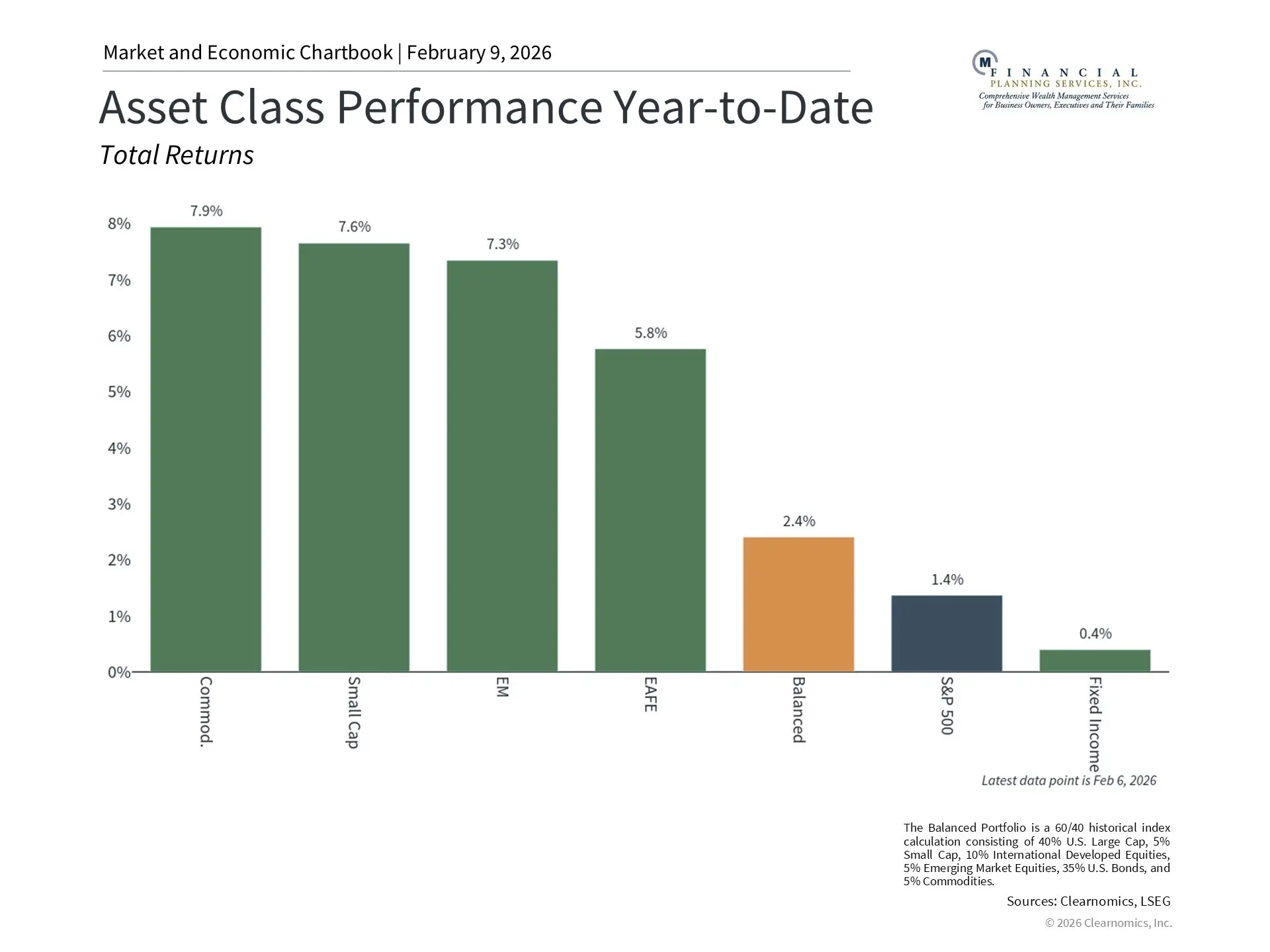
Early in the month, world events caused market volatility (the technical term for how much prices move up and down). A U.S. operation in Venezuela captured Nicolás Maduro, which led to discussions about oil markets. Venezuela has the world's largest proven oil reserves but produces very little oil due to poor infrastructure. For investors, world events often affect financial markets through commodity prices (raw materials like oil), and oil remains central to the global economy.
Concerns increased further over U.S. statements about purchasing Greenland for defense and commodity reasons. This sparked disputes with NATO countries that led to the S&P 500's worst day since last October. However, the situation improved quickly after President Trump met with the NATO secretary general and established a "framework of a future deal," which helped the market recover.
For long-term investors, world events may create short-term uncertainty, but history shows that their effects on markets are often overstated. Markets have typically recovered as the initial shock passes. Investors should avoid reacting too strongly to headlines and instead focus on their long-term financial goals.
Gold and silver prices moved sharply
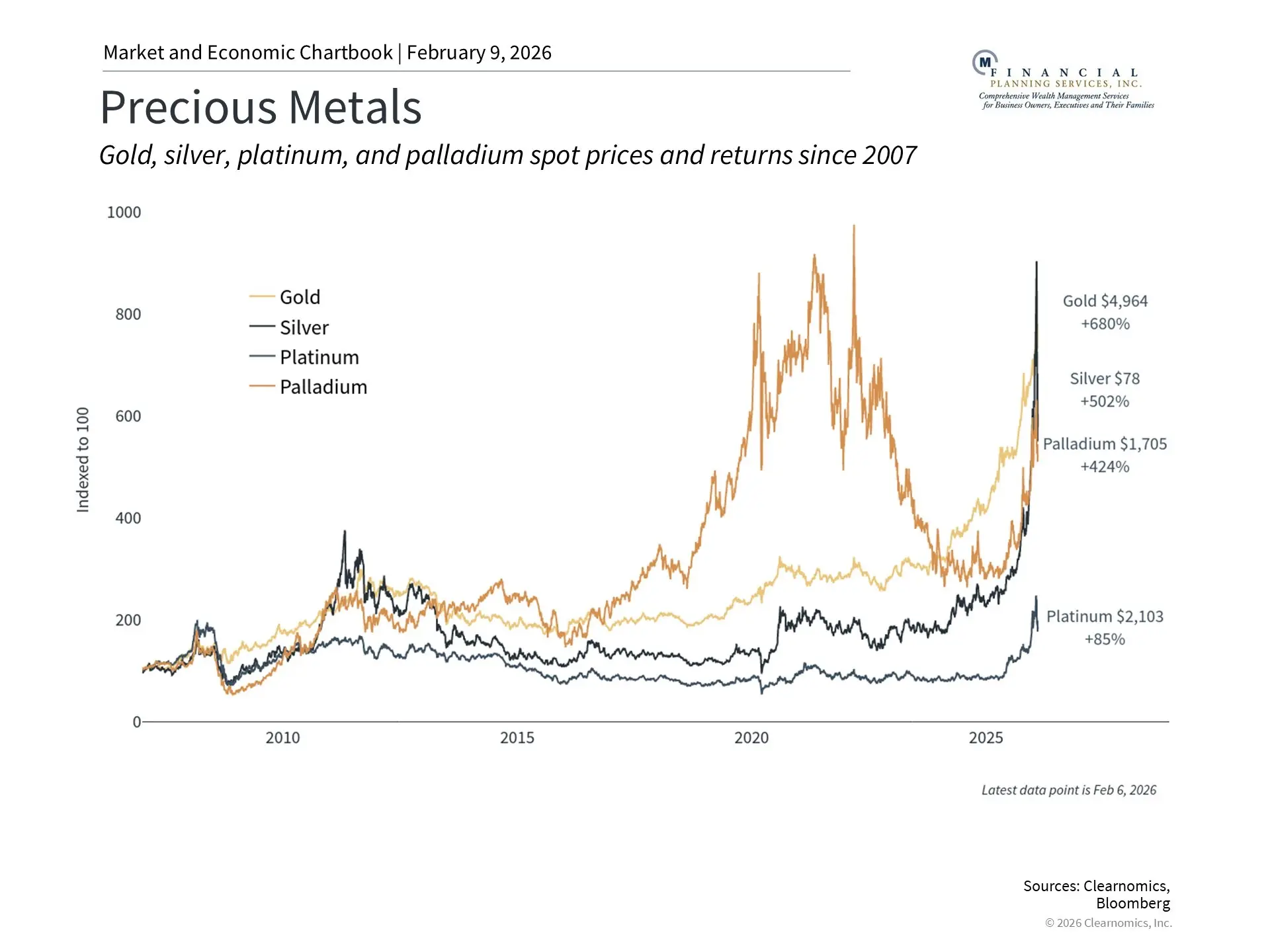
Precious metals (gold and silver) continued to rise until a big reversal on the final day of January. Gold rose to nearly $5,600 during the day while silver exceeded $120 per ounce before both sold off sharply. These moves were driven by several factors including geopolitical risk, central bank purchases, and concerns about Federal Reserve independence.
However, on January 30, President Trump announced his intention to nominate Kevin Warsh as the next Fed Chair once Jerome Powell's term ends in mid-May. Warsh is a former Fed governor who has recently stated he prefers lower interest rates but has also advocated for keeping rates higher to prevent inflation in the past. For investors, this shifted expectations about future Fed policy, which led to a sharp decline in both gold and silver prices, with the dollar rising slightly.
This reversal shows that precious metals can experience boom-and-bust cycles and demonstrates how quickly markets can shift based on policy expectations. While precious metals can serve a purpose for investors, their volatility during January shows why they should complement, rather than replace, core holdings in stocks and bonds.
Company earnings remained strong
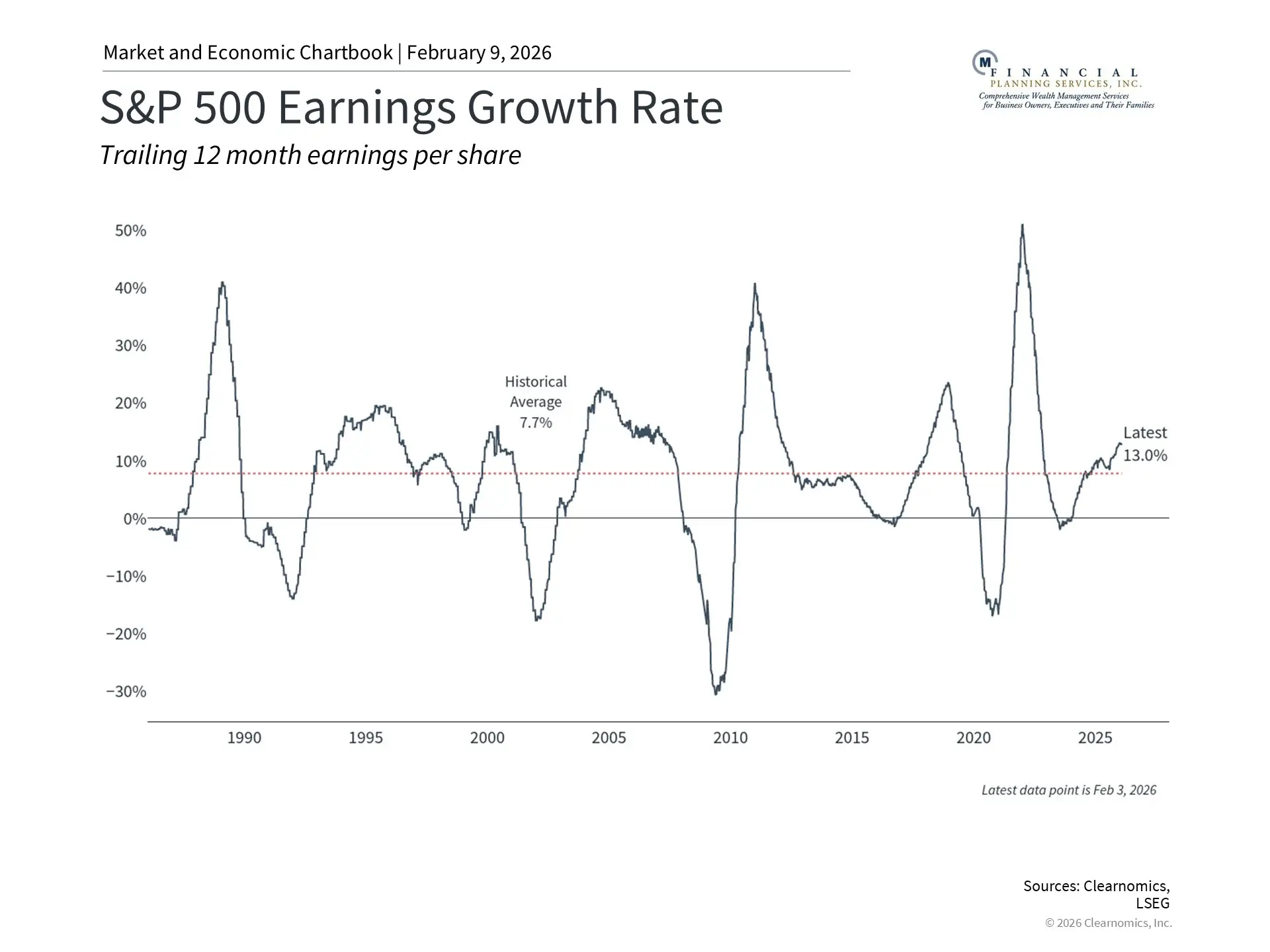
Beyond the main headlines, fourth quarter earnings (the profits companies report) showed that businesses continue to perform well. According to FactSet, 33% of S&P 500 companies have reported results and 75% have beaten expectations. If these trends continue, large public companies could achieve a growth rate of 11.9% for the quarter, representing the 5th consecutive quarter of double-digit earnings growth.
For long-term investors, the message from earnings season is positive. Corporate profitability remains strong across many sectors, supporting stock valuations (the prices investors pay for stocks). This fundamental strength is one reason major indexes remained positive for the month despite considerable volatility.
The bottom line? January experienced market volatility due to world events and Federal Reserve news. However, markets were resilient and healthy company earnings helped major indexes reach new record highs. For long-term investors, this highlights the importance of maintaining a proper mix of investments that aligns with your financial goals.
***
The content is developed from sources believed to be providing accurate information. The information in this material is not intended as tax or legal advice. Please consult legal or tax professionals for specific information regarding your individual situation. The opinions expressed and material provided are for general information, and should not be considered a solicitation for the purchase or sale of any security.
This material was prepared by Clearnomics, Inc. The information contained herein has been
obtained from sources believed to be reliable, but is not necessarily complete and its
accuracy cannot be guaranteed. No representation or warranty, express or implied, is made
as to the fairness, accuracy, completeness, or correctness of the information and opinions
contained herein. The views and the other information provided are subject to change
without notice. All reports posted on or via www.clearnomics.com or any affiliated
websites, applications, or services are issued without regard to the specific investment
objectives, financial situation, or particular needs of any specific recipient and are not to be
construed as a solicitation or an offer to buy or sell any securities or related financial
instruments. Past performance is not necessarily a guide to future results. Company
fundamentals and earnings may be mentioned occasionally, but should not be construed as
a recommendation to buy, sell, or hold the company’s stock. Predictions, forecasts, and
estimates for any and all markets should not be construed as recommendations to buy, sell,
or hold any security--including mutual funds, futures contracts, and exchange traded funds,
or any similar instruments. The text, images, and other materials contained or displayed in
this report are proprietary to Clearnomics, Inc. and constitute valuable intellectual
property. All unauthorized reproduction or other use of material from Clearnomics, Inc.
shall be deemed willful infringement(s) of this copyright and other proprietary and
intellectual property rights, including but not limited to, rights of privacy. Clearnomics, Inc.
expressly reserves all rights in connection with its intellectual property, including without
limitation the right to block the transfer of its products and services and/or to track usage
thereof, through electronic tracking technology, and all other lawful means, now known or
hereafter devised. Clearnomics, Inc. reserves the right, without further notice, to pursue to
the fullest extent allowed by the law any and all criminal and civil remedies for the violation
of its rights.