

The Federal Reserve (often called "the Fed") is America's central bank. It helps manage the economy and keeps the financial system stable. In May 2026, Jerome Powell's time as Fed Chair will end. This means the president will choose a new leader for the Fed. This change could affect interest rates, stock markets, and your investments.
Many news stories focus on whether the Fed will raise or lower interest rates. But there's a bigger question: What should the Fed's job actually be? People disagree about how much power the Fed should have and what it should do with interest rates. Understanding these debates can help you make sense of Fed news in the coming months.
The Fed's job has grown over time
Congress created the Federal Reserve in 1913 to stop bank panics. In the 1800s and early 1900s, these panics happened often. During a panic, people would rush to take their money out of banks all at once. This could cause banks to fail and hurt the whole economy.
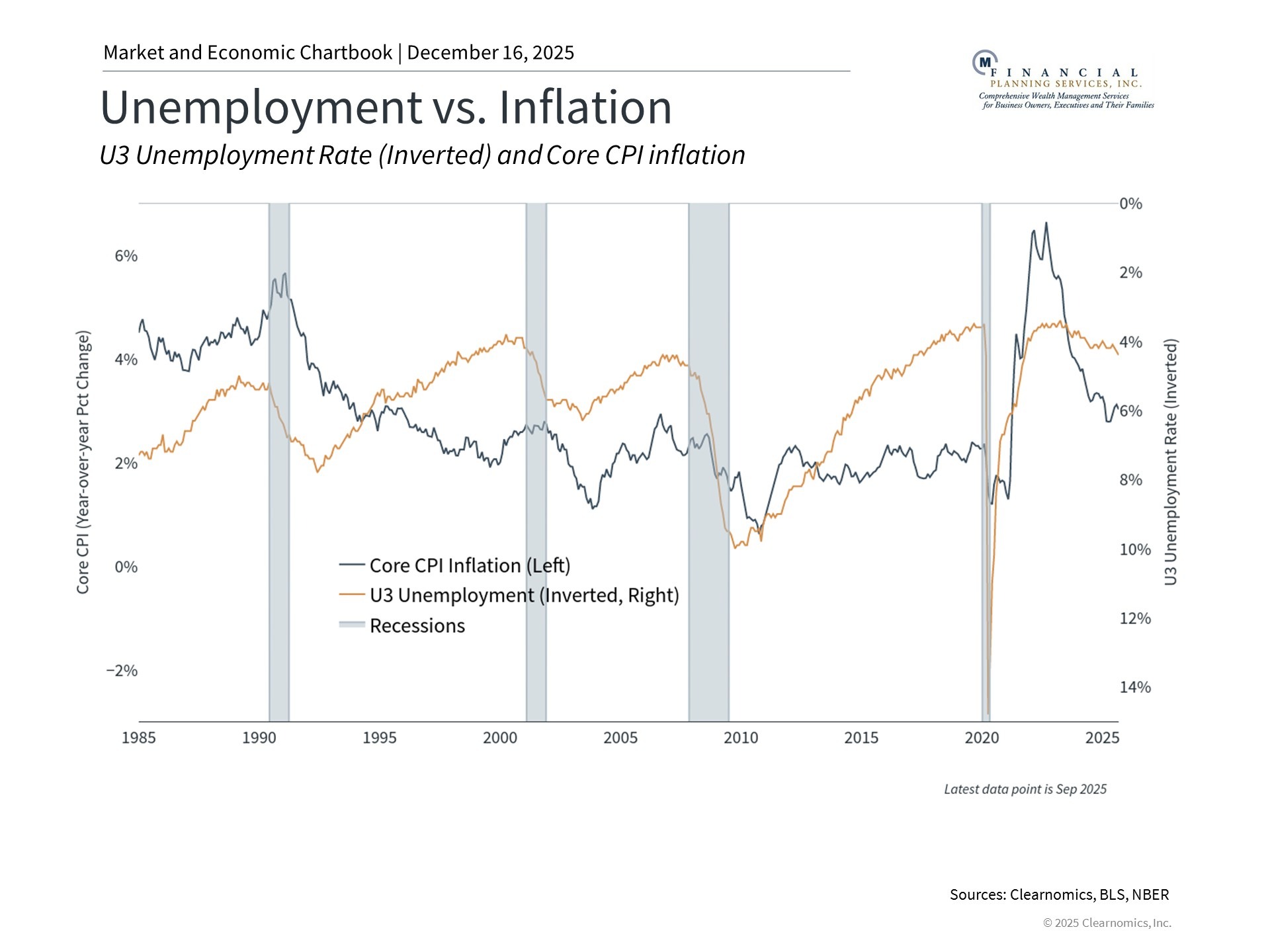
Today, the Fed still protects banks and the financial system. But its job has expanded. Since 1977, the Fed has had a "dual mandate." This means it tries to keep unemployment low and prices stable (meaning low inflation). The Fed mainly does this by raising or lowering interest rates.
Because the Fed now manages more than just banks, people pay close attention to its decisions. Each time the Fed changes interest rates, investors look for clues about what it thinks about the economy.
Fed independence has pros and cons
The president appoints Fed officials, and Congress approves them. But voters don't elect them directly. Some people think this is a problem because the Fed has so much power. Others say Fed independence is important because the Fed sometimes needs to make unpopular choices, like raising interest rates even if it slows the economy.
The Fed doesn't always get things right. It can only control short-term interest rates directly. It can't fix supply chain problems, trade issues, or other economic challenges. Also, the Fed can't perfectly predict the future. Sometimes it acts too slowly or too quickly in response to economic changes.
New leadership may bring policy changes
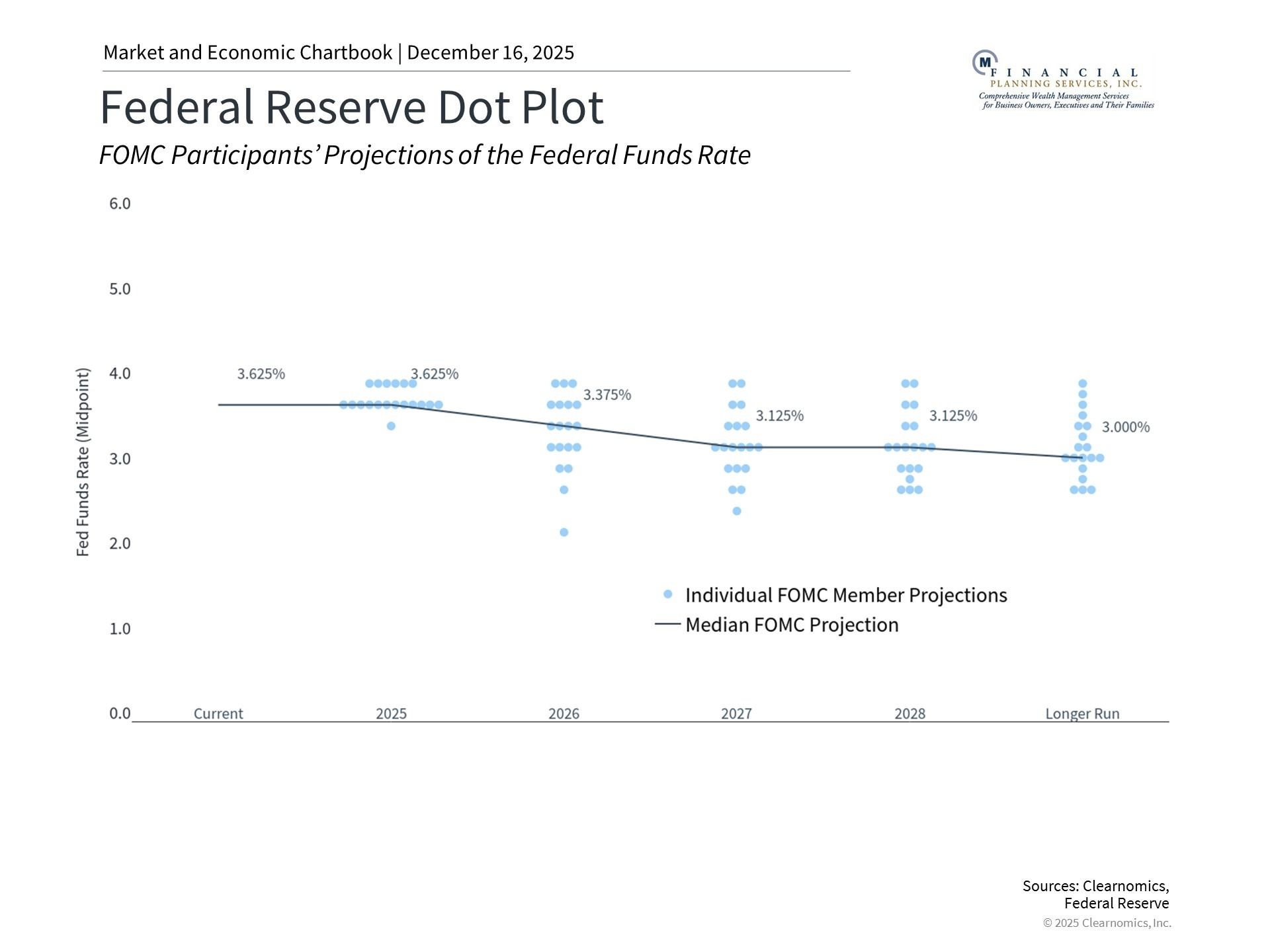
The president is expected to name a new Fed Chair in early 2026. The new leader will likely favor keeping interest rates lower. The chart above shows the Fed's current rate projections. These forecasts may change once new leadership is in place.
However, the Fed Chair doesn't make decisions alone. Twelve voting members serve on the Federal Open Market Committee (FOMC). The Chair needs to convince other members to support policy changes. This means changes may happen more slowly than some expect.
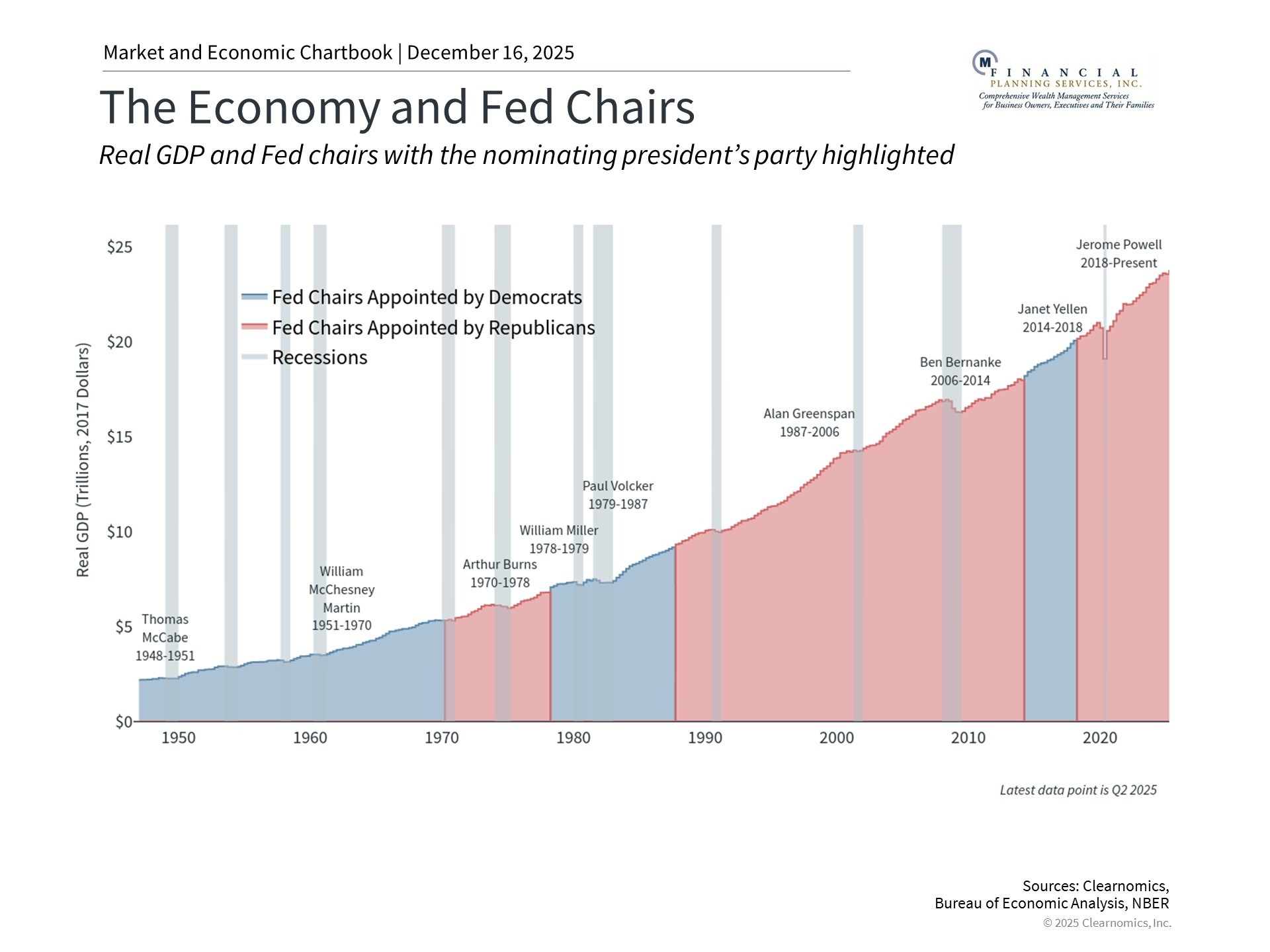
It's also worth noting that the economy has grown steadily under Fed Chairs from both political parties. What matters most is whether Fed policy fits current economic conditions, not who the Chair is.
Focus on long-term trends, not daily headlines
You'll likely see many news stories about Fed leadership in the coming months. But what really matters is the overall health of the economy. The new Fed Chair's decisions will depend on whether jobs remain stable and inflation stays under control. As an investor, it's best to stick with your long-term plan rather than react to daily Fed speculation.
The bottom line? Markets have done well under different Fed leaders and policies. For investors, staying focused on long-term goals remains the best approach.
The content is developed from sources believed to be providing accurate information. The information in this material is not intended as tax or legal advice. Please consult legal or tax professionals for specific information regarding your individual situation. The opinions expressed and material provided are for general information, and should not be considered a solicitation for the purchase or sale of any security.