

Recently, U.S. forces arrested Venezuelan President Nicolás Maduro on charges of drug trafficking and corruption. President Trump said the U.S. will "run" Venezuela and work to increase its oil production.
You may be wondering how this affects your investment portfolio. While the situation is important for the people of Venezuela and the surrounding region, investors should understand what it means for their money. History shows us that major political events like this often cause short-term ups and downs in the market, but they usually don't change the long-term direction of the economy or stock market.
What history tells us about geopolitical events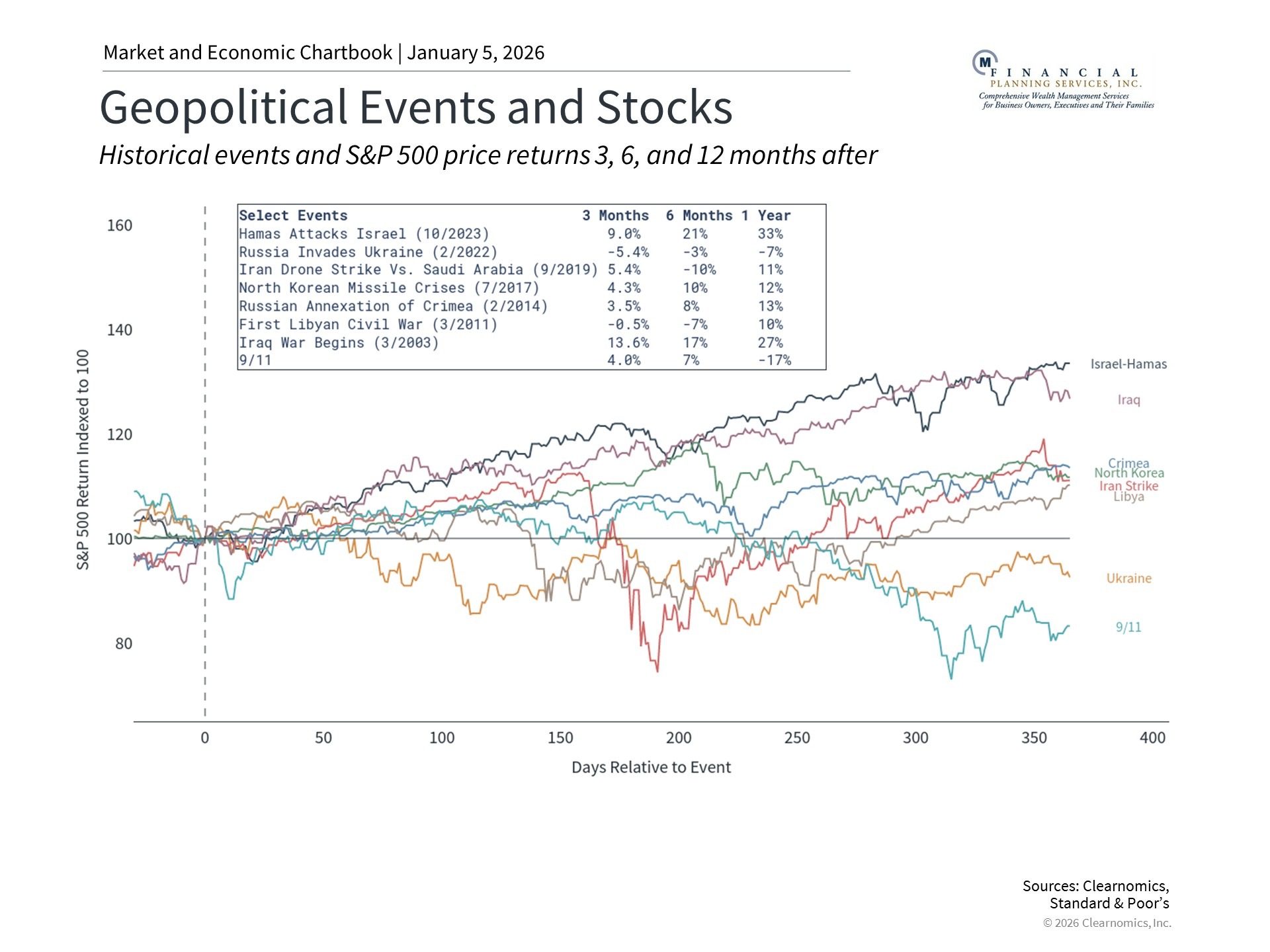
The chart above shows many significant political events from recent decades. In most cases, markets bounced back within weeks or months. This is because these events typically don't change the fundamental factors that drive market performance over time.
The U.S. has intervened in Latin American countries before. For example, in 1990, the U.S. captured Manuel Noriega in Panama on similar charges. Maduro has actually been under criminal charges by the U.S. Department of Justice since 2020.
How oil connects this event to financial markets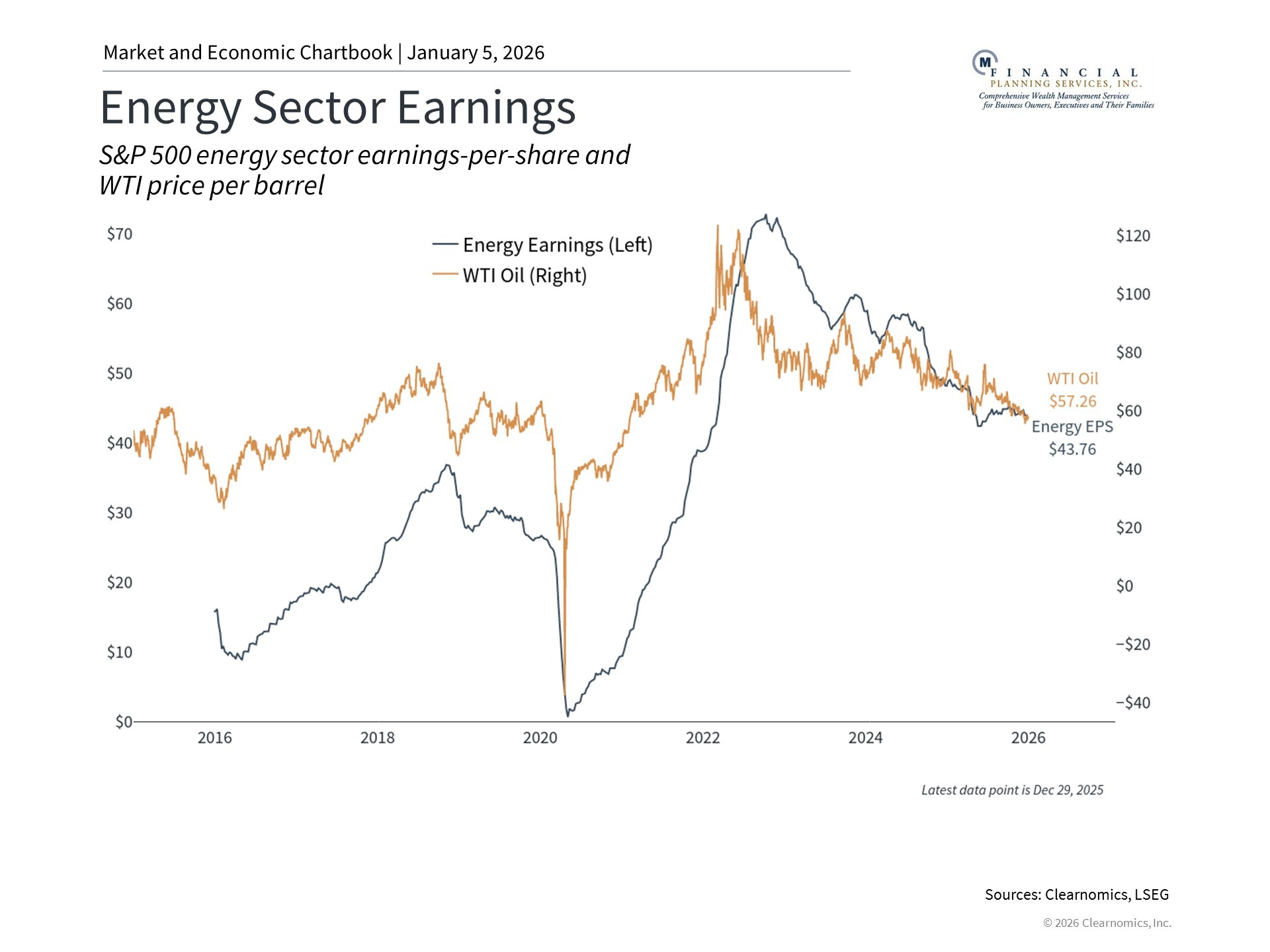
The main way this situation could affect markets is through oil prices. Venezuela has the world's largest proven oil reserves—about 304 billion barrels. That's more than even Saudi Arabia has.
However, Venezuela currently produces less than 1 million barrels per day, compared to the U.S. which produces nearly 14 million.1 Years of poor management and sanctions have reduced their production significantly. Even if production increases, it will take time and investment to meaningfully add to global supply.
This is different from Russia's invasion of Ukraine in 2022, which disrupted existing oil supply and drove prices to nearly $128 per barrel. That pushed U.S. gas prices above $5 per gallon. In contrast, increased Venezuelan production over time could actually lower oil prices, which would be positive for consumers and the broader economy.
Venezuela's limited role in investment markets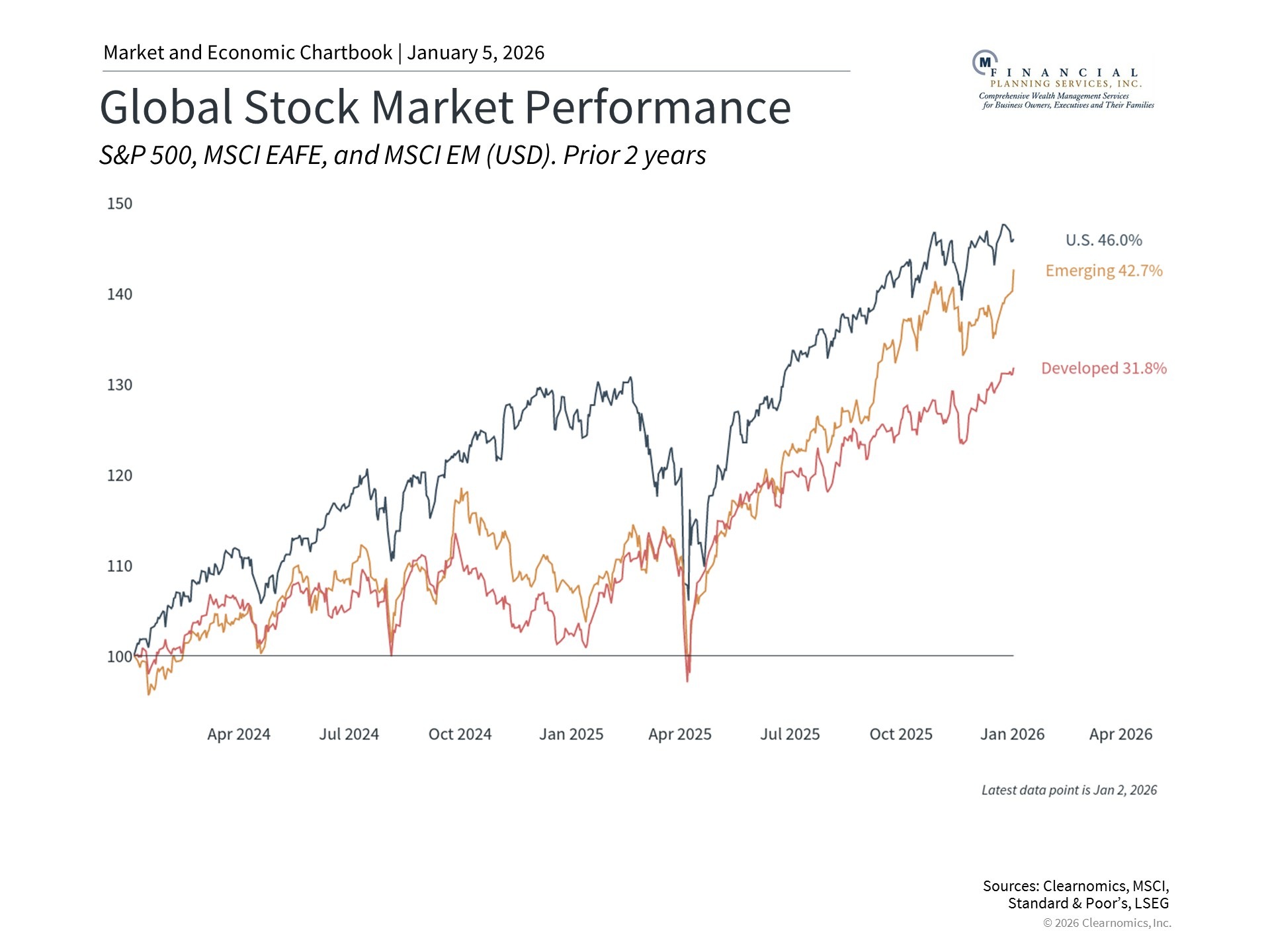
Venezuela plays almost no role in global investment markets. Its stock market is small with very limited foreign investment. It's not included in major emerging market indexes, so most international investors have little or no direct exposure to Venezuelan stocks.
Venezuela has also been in default on its debt since 2017, meaning it stopped making payments to bondholders. The situation will continue to develop, but any effects on your portfolio are likely to come indirectly through oil prices rather than direct investments in Venezuela.
The bottom line? While the arrest of Venezuela's president is a significant political development, history shows that portfolios built around long-term financial goals can successfully navigate this type of uncertainty.
References
1. https://www.eia.gov/outlooks/steo/tables/pdf/3dtab.pdf
The content is developed from sources believed to be providing accurate information. The information in this material is not intended as tax or legal advice. Please consult legal or tax professionals for specific information regarding your individual situation. The opinions expressed and material provided are for general information, and should not be considered a solicitation for the purchase or sale of any security.