

You may have heard about some lending problems in the financial markets recently. To understand what's happening, it helps to know that lending today looks different than it did years ago. After the 2008 financial crisis, banking rules became stricter. As a result, more lending moved away from traditional banks to other types of companies.
These other lenders include private credit funds, mortgage companies, and online lenders. They're called "non-depository financial institutions" because they don't take customer deposits like banks do. This means they follow different rules than banks. However, banks are still connected to these lenders - banks have loaned about $1.2 trillion to them.1 Some people call this the "shadow banking" system because it's less visible than traditional banking.
Recently, a few borrowers were accused of fraud. In September, an auto lender called Tricolor collapsed after allegedly using the same cars as collateral for multiple loans. Around the same time, an auto parts company called First Brands filed for bankruptcy. More recently, two telecom companies faced fraud allegations for using fake invoices.2,3
JPMorgan CEO Jamie Dimon said "when you see one cockroach, there are probably more." This comment worried some investors. The question is: do these problems signal bigger issues in the credit markets? For long-term investors, it's important to understand whether these are isolated cases or signs of widespread trouble.
Looking at past financial problems helps us understand today's situation
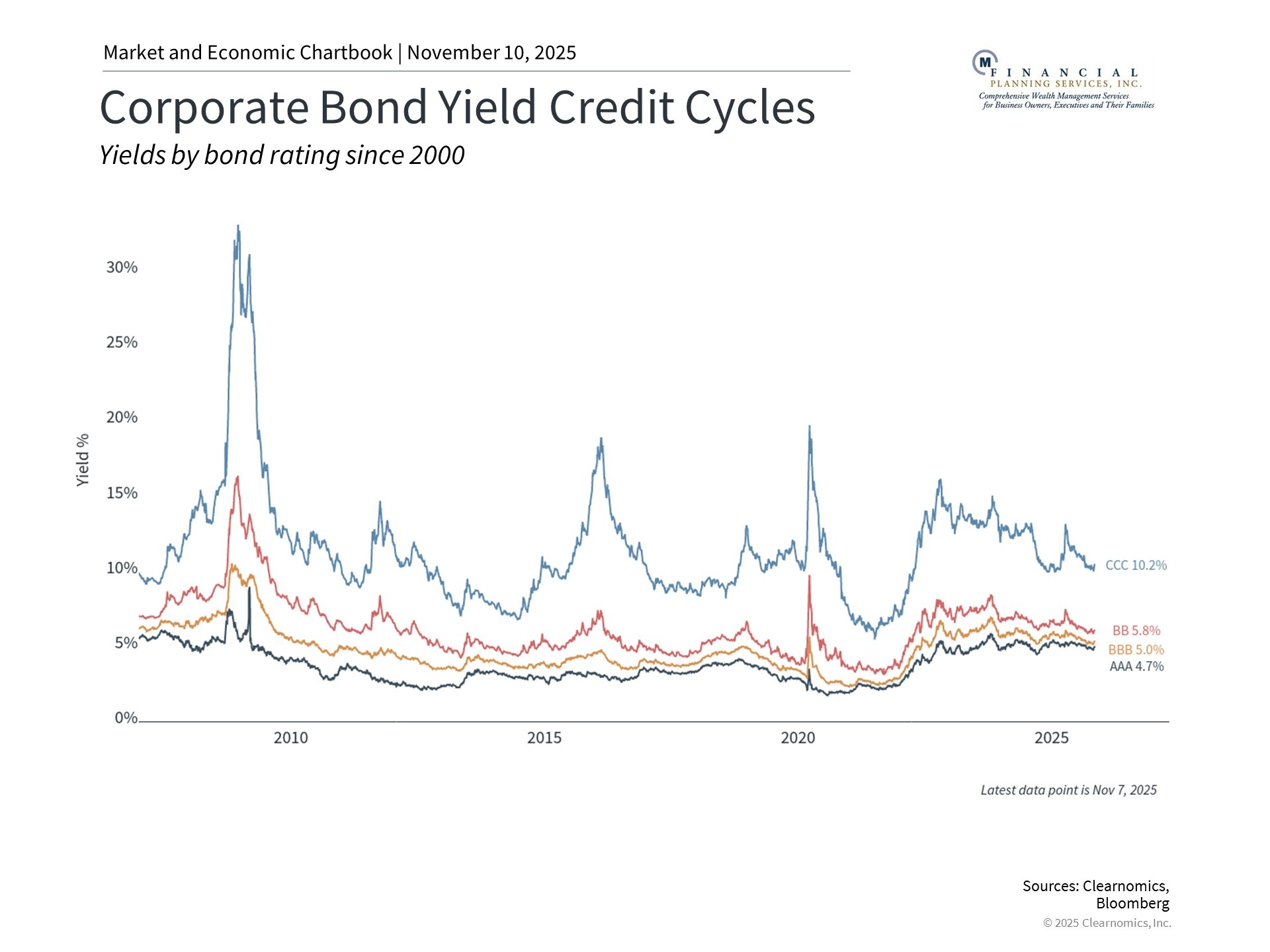
The 2008 financial crisis happened because major banks borrowed too much money compared to what they owned. This high level of borrowing (called leverage) caused problems throughout the entire financial system. The 2023 banking crisis was different - a few regional banks failed because of mismatches between their assets and liabilities when interest rates rose quickly.
The good news? The 2023 crisis didn't lead to a broader economic downturn. It showed that while problems can emerge quickly in financial markets, they can also stabilize. Today, bond yields and credit spreads (the extra interest risky borrowers pay) remain relatively stable, as shown in the chart above.
Credit cycles affect the economy over time
Throughout history, lending and borrowing patterns have driven economic ups and downs. When there's plenty of money available, businesses and individuals borrow more. This has happened many times - during the railroad expansion in the 1800s, the "roaring twenties," and the housing boom in the mid-2000s.
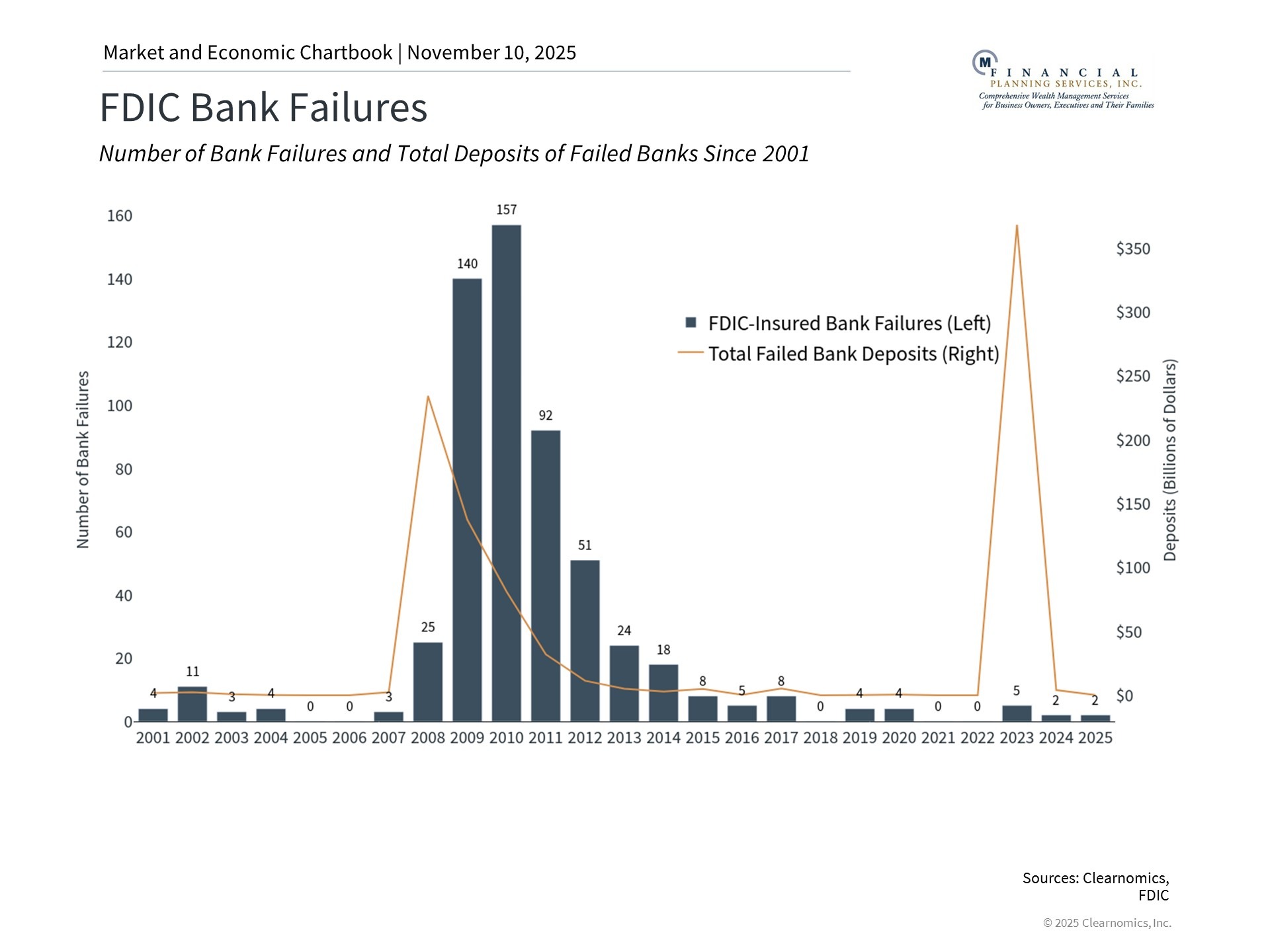
For big banks, each bad loan matters because it affects their quarterly earnings. For long-term investors, what matters more is whether problems spread throughout the economy and affect many different investments. So far, the amounts involved in recent cases are small compared to the overall financial system. Major banks remain well-capitalized (meaning they have plenty of money on hand), and there's no sign of broader economic problems. The chart above shows the banking system has been stable recently.
Markets have stayed relatively steady
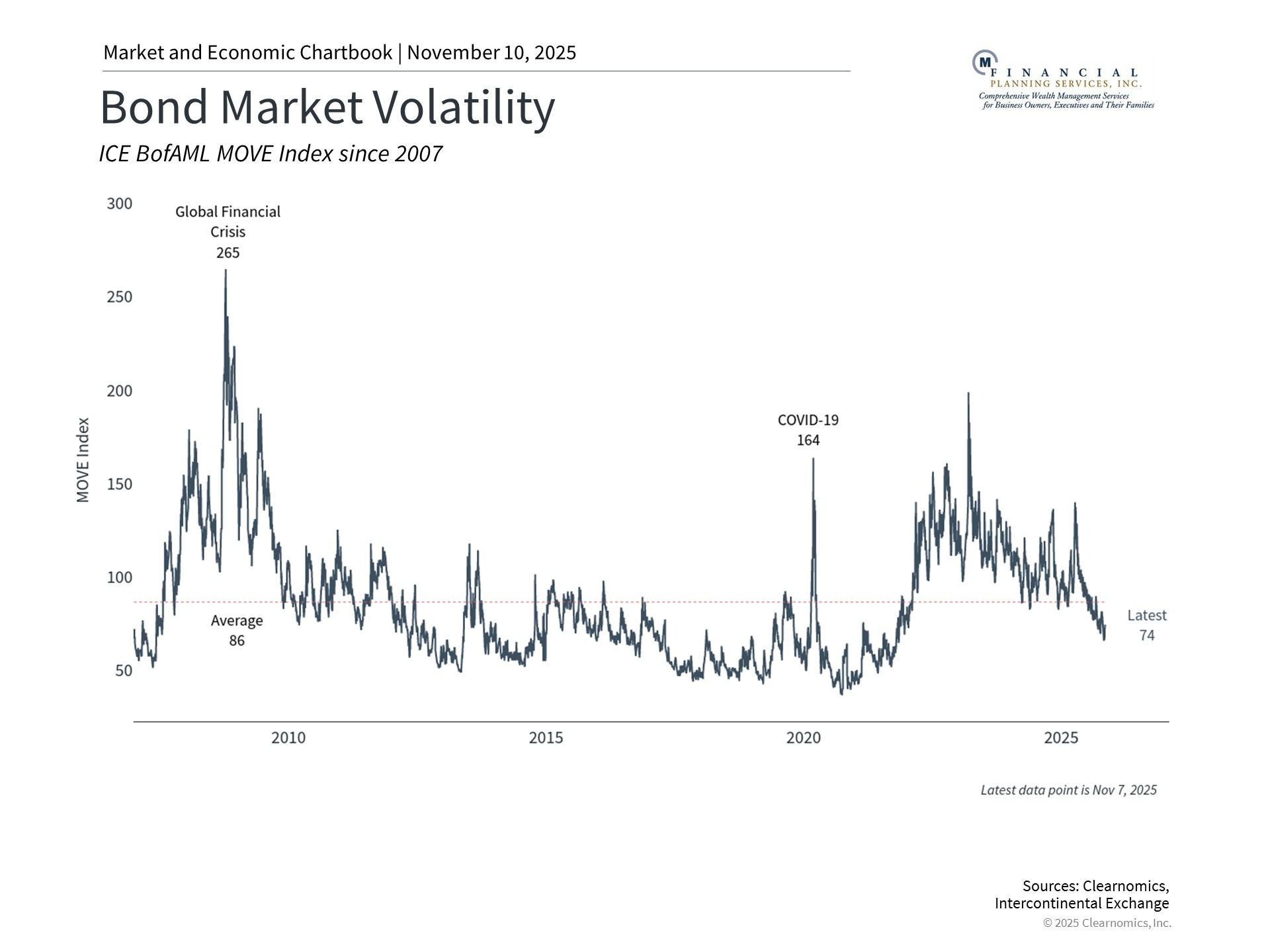
Recently, markets have experienced some ups and downs due to tariffs, government issues, financial concerns, and questions about AI companies. However, major stock indices have continued reaching new highs, and bonds have also performed well.
For investors with long-term goals, the recent headlines about fraud and bankruptcies are part of normal market cycles. While individual cases may be concerning, they haven't affected the broader financial system so far. Markets have already calmed down after the initial news.
The bottom line? Recent lending problems have raised concerns, but markets have stabilized. For long-term investors, these events highlight the importance of maintaining a diversified portfolio aligned with your goals.
References
1. https://www.fitchratings.com/research/non-bank-financial-institutions/us-bank-lending-to-non-banks-continues-to-outpace-all-other-types-15-05-2025
2. https://www.bloomberg.com/news/articles/2025-10-31/is-a-private-credit-crisis-brewing-tricolor-first-brands-shake-wall-street
3. https://www.wsj.com/finance/blackrock-stung-by-loans-to-businesses-accused-of-breathtaking-fraud-6de5c3a7
The content is developed from sources believed to be providing accurate information. The information in this material is not intended as tax or legal advice. Please consult legal or tax professionals for specific information regarding your individual situation. The opinions expressed and material provided are for general information, and should not be considered a solicitation for the purchase or sale of any security.