

Recently, the stock market had its worst day since April. This happened because of growing disagreements between the U.S. and China over certain important materials and trade fees. While this drop worried some people who invest, markets bounced back quickly after the White House used gentler language about trade. If you've been investing for a while, these sudden changes might feel familiar.
Even with uncertainty about trade fees this year, markets have done quite well. The S&P 500, Nasdaq, and Dow have all gone up by double digits. Bonds (which are loans to companies or governments) have also helped investment portfolios, with gains of 6.7% this year. International markets have done even better than U.S. markets. Given this context, it's important not to let one bad day change your investment plans.
Instead, think of market swings as a normal part of investing. Keeping a long-term view is key to financial success. Understanding what caused the market's reaction and keeping your investments balanced can help you stay focused on your goals.
Why rare earth metals matter in trade discussions
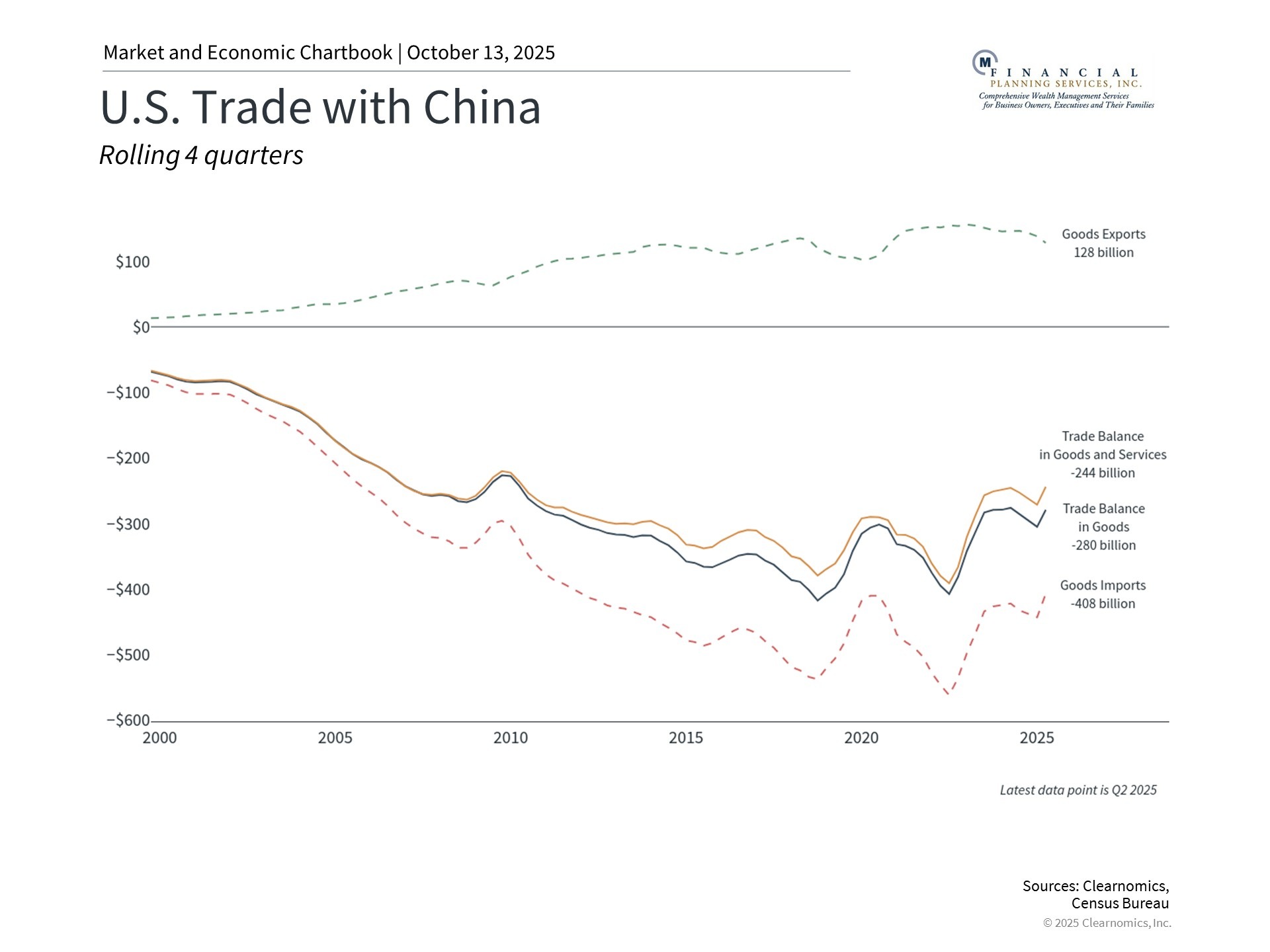
The recent market volatility came from China limiting exports of rare earth metals. In response, the White House threatened to add a 100% tariff (trade fee) on Chinese goods. This is part of an ongoing back-and-forth that has created uncertainty all year. Fortunately, the White House has softened its stance and suggested negotiations might happen soon.
What are rare earth metals? These are special materials used in smartphones, electric cars, batteries, and military equipment. Despite the name, they aren't actually rare in nature. However, China has built up its mining and processing abilities over many years, making it the world's leader. China controls about 70% of global production and nearly 90% of processing. This gives China significant leverage in trade discussions. While the U.S. has some stockpiles and plans to produce more, this will take time.
For investors, it's hard to know if threats about tariffs are real or just part of negotiations. This can cause quick changes in how the market behaves. That's why it's important not to overreact to news headlines and instead focus on longer-term trends.
Market swings have increased after a calm period
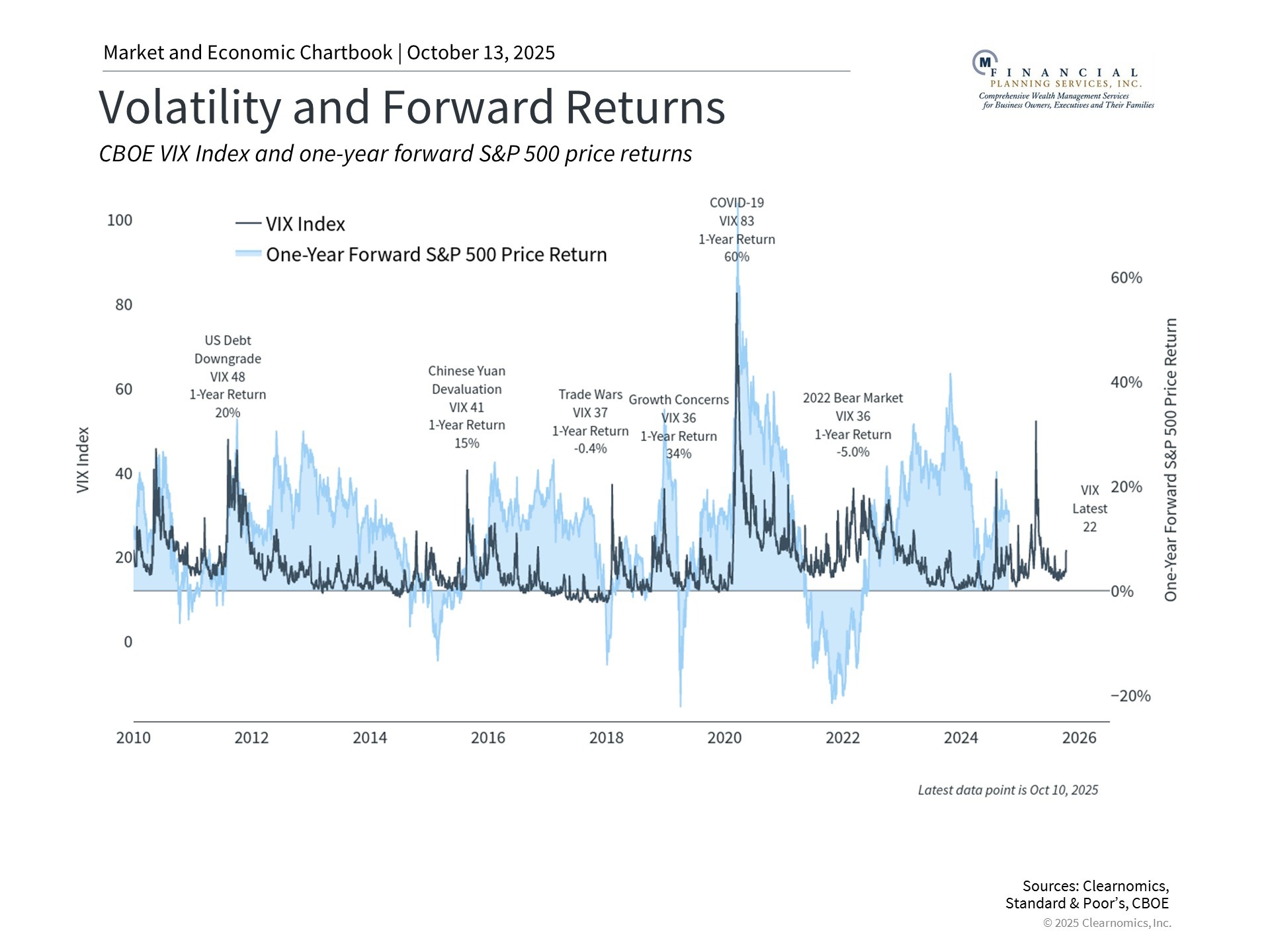
Recent market movements have increased uncertainty. This isn't surprising since investors have been concerned about stock valuations and whether technology stocks can keep rising.
History shows that volatile periods (when prices move up and down more than usual) often create good investment opportunities. The chart shows the relationship between the VIX index (which measures market volatility) and how the S&P 500 performed over the following year. When the VIX spikes, meaning more volatility, the market has often done well afterward. This shows why it can be harmful to overreact to market swings.
Markets have done well this year despite concerns
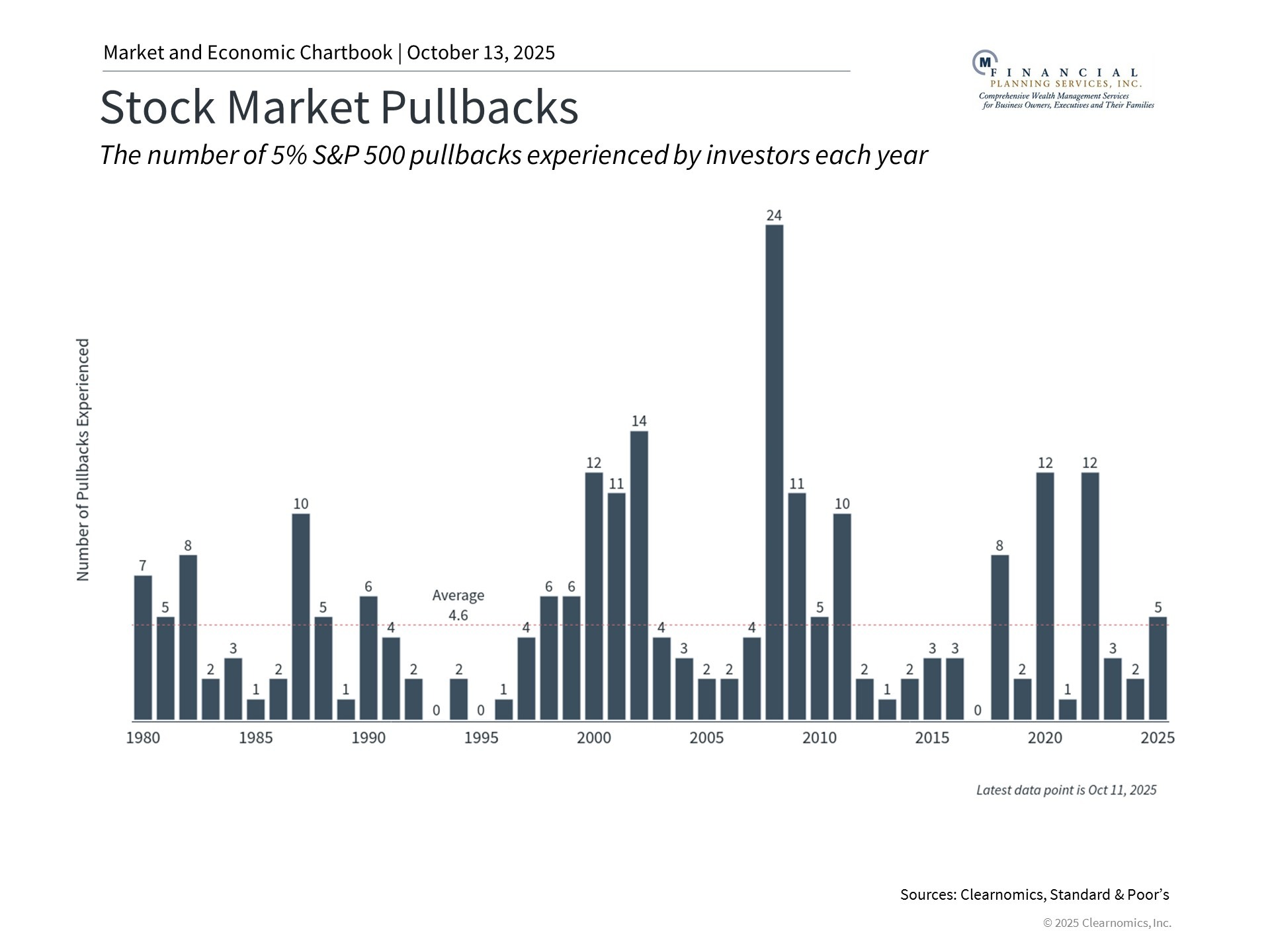
While October 10's 2.7% decline was significant, it's important to keep perspective. The chart shows that market drops of 5% or more happen regularly, even during good years. This year has actually been quite typical compared to the past 45 years. In fact, the S&P 500 has risen 31.5% since April and hit over 30 new record highs this year.
The key point is that markets don't always go straight up. Periods of uncertainty are normal and expected. Being ready for short-term turbulence and not worrying about every new development is crucial for long-term success.
The bottom line? Brief periods of market volatility are challenging but normal, especially during trade tensions between the U.S. and China. History shows that uncertain times, while uncomfortable, often create the best opportunities for patient investors.
The content is developed from sources believed to be providing accurate information. The information in this material is not intended as tax or legal advice. Please consult legal or tax professionals for specific information regarding your individual situation. The opinions expressed and material provided are for general information, and should not be considered a solicitation for the purchase or sale of any security.
Content in this material is for general information only and not intended to provide specific advice or recommendations for any individual. All performance referenced is historical and is no guarantee of future results. All indices are unmanaged and may not be invested into directly.
The Standard & Poor’s 500 Index is a capitalization weighted index of 500 stocks designed to measure performance of the broad domestic economy through changes in the aggregate market value of 500 stocks representing all major industries.
The CBOE Volatility Index® (VIX®) is meant to be forward looking, showing the market's expectation of 30-day volatility in either direction, and is considered by many to be a barometer of investor sentiment and market volatility, commonly referred to as “Investor Fear Gauge”.
All investing involves risk including loss of principal. No strategy assures success or protects against loss. There is no guarantee that a diversified portfolio will enhance overall returns or outperform a non-diversified portfolio. Diversification does not protect against market risk.