

The stock market bounced back in May, with the S&P 500 erasing all its losses for the year. This happened even though there were concerns about U.S. government debt and mixed economic news. While the economy showed strength, consumers still worried about the future. Bond prices moved up and down due to concerns about government spending. For investors who think long-term, May shows that markets can handle uncertainty.
What Happened in the Markets1
- The S&P 500 (a measure of 500 large U.S. companies) rose 6.2% in May - its best month since 2023. The Dow Jones went up 3.9%, and the Nasdaq gained 9.6%.
- Bonds fell 0.7% in May. The 10-year Treasury yield (interest rate) ended at 4.4%.
- International stocks also did well, with both developed and emerging markets up 4.0%.
- The U.S. dollar weakened to 99.3, near a three-year low.
- Bitcoin hit a record high of $111,092 before ending at $104,834.
- Gold also hit a record high of $3,422, ending at $3,288 - up 24% for the year.
- Inflation (rising prices) slowed to 2.3% in April, the lowest since early 2021.
- The economy added 177,000 jobs in April with unemployment staying low at 4.2%.
May's recovery shows why it's important to stay invested during tough times. After a difficult April, markets quickly bounced back. This pattern has happened many times before, though past results don't guarantee future outcomes.
Credit rating agency cuts U.S. rating
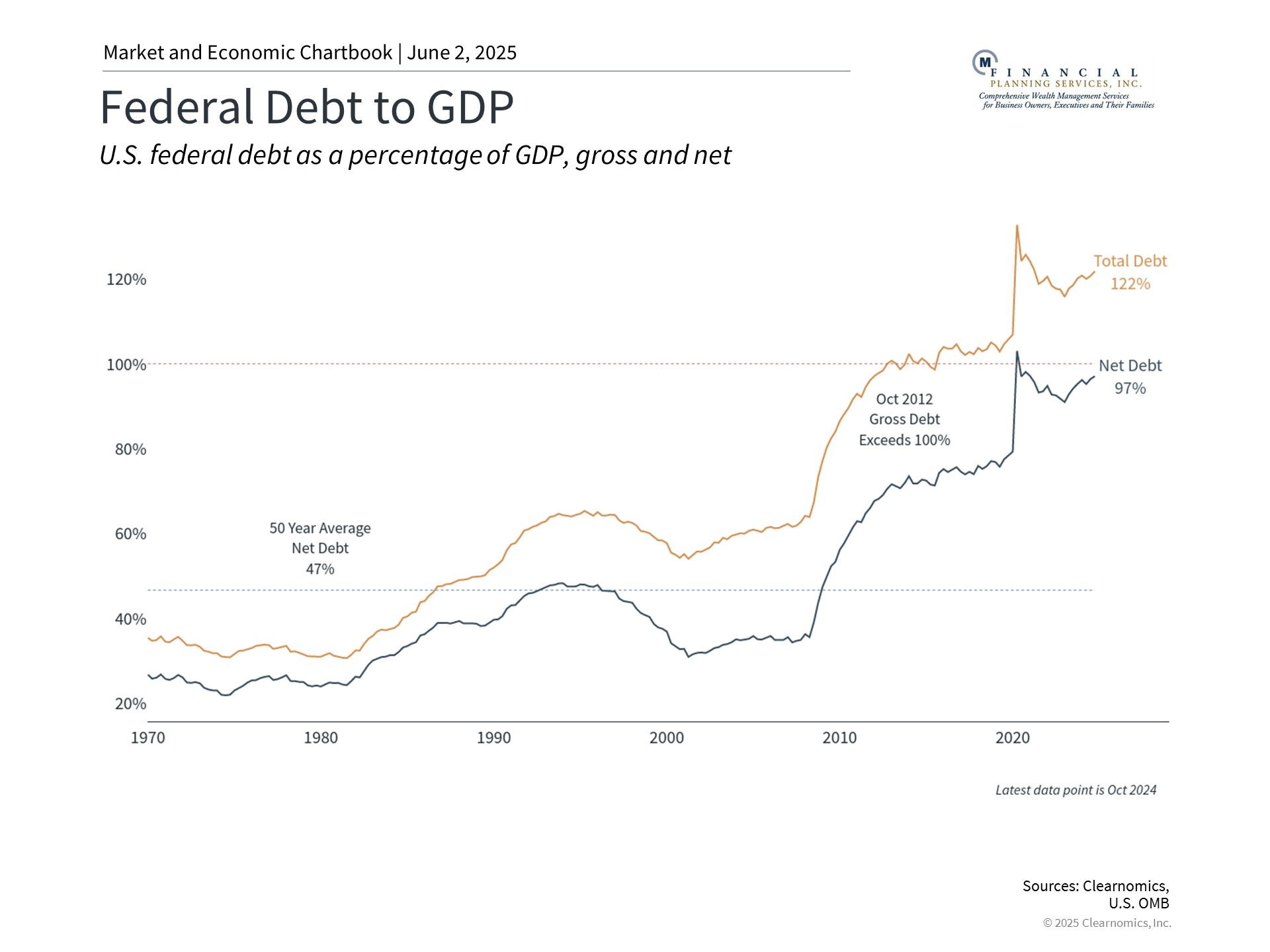
Moody's (a credit rating agency) downgraded the U.S. credit rating from Aaa to Aa1 in May. This means they think the U.S. is slightly less likely to pay back its debts. The chart shows U.S. total debt reached 122% of GDP (the country's total economic output) in 2024.
Despite this historic downgrade, markets barely reacted. Investors already knew about the debt problems. Also, U.S. Treasury bonds are still seen as very safe investments, just like after a similar downgrade in 2011.
Congress passed a tax bill that could add $2.8 trillion to the deficit over 10 years. The bill extends tax cuts including lower rates and higher deductions. While the U.S. has debt challenges, the dollar remains the world's main currency and Treasury bonds stay in high demand.
Trade deals show progress
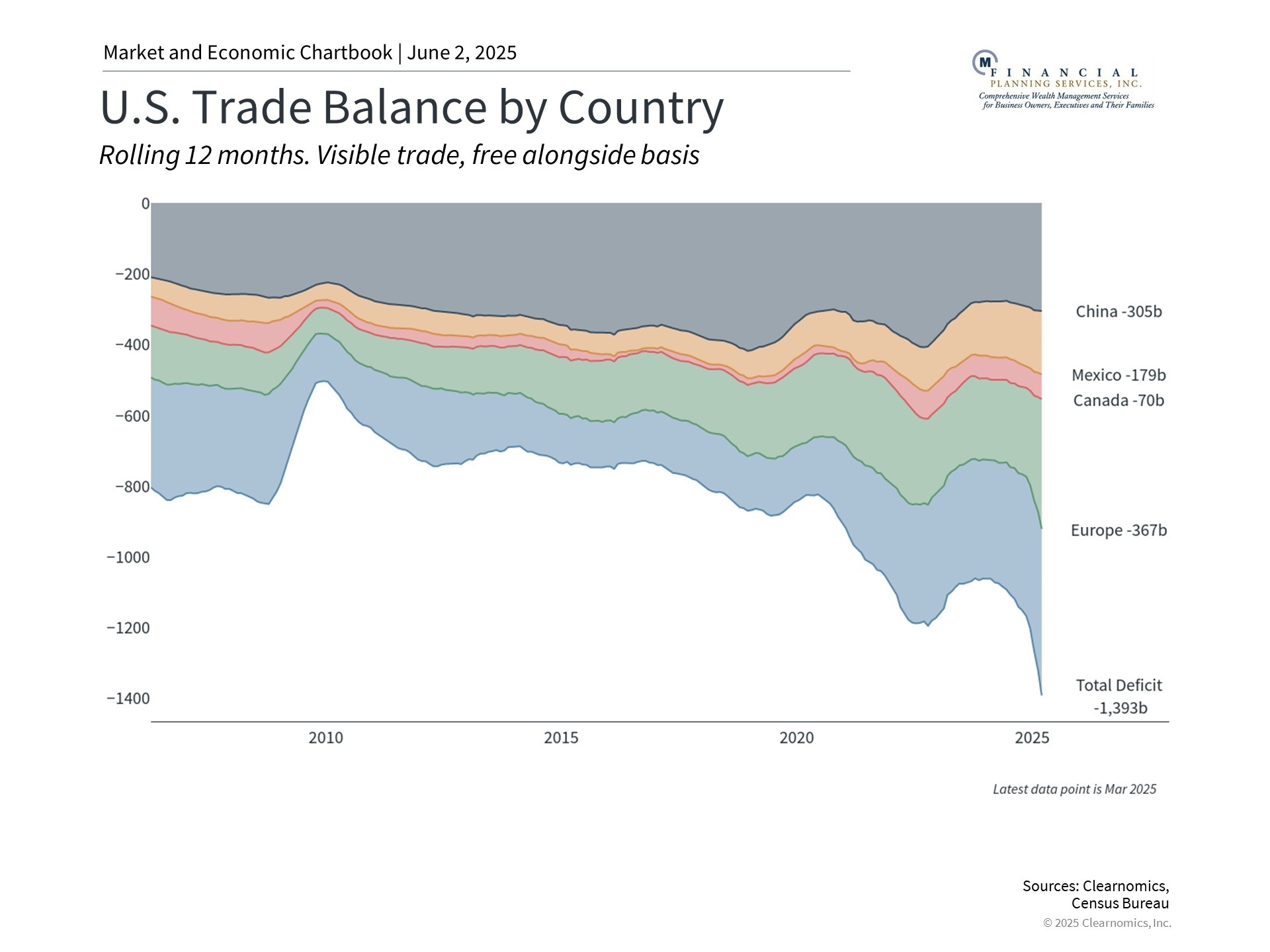
The U.S. made progress on trade deals in May, reducing fears of trade wars. Agreements were reached with the U.K. and China, including a 90-day period of lower tariffs (taxes on imports) on Chinese goods.
However, trade uncertainty continues. Both countries have accused each other of breaking the trade agreement. A court also struck down some tariffs, though they remain in place while the government appeals. Trade policy typically takes months or years to unfold, so investors shouldn't overreact to daily headlines.
Company earnings support stock prices
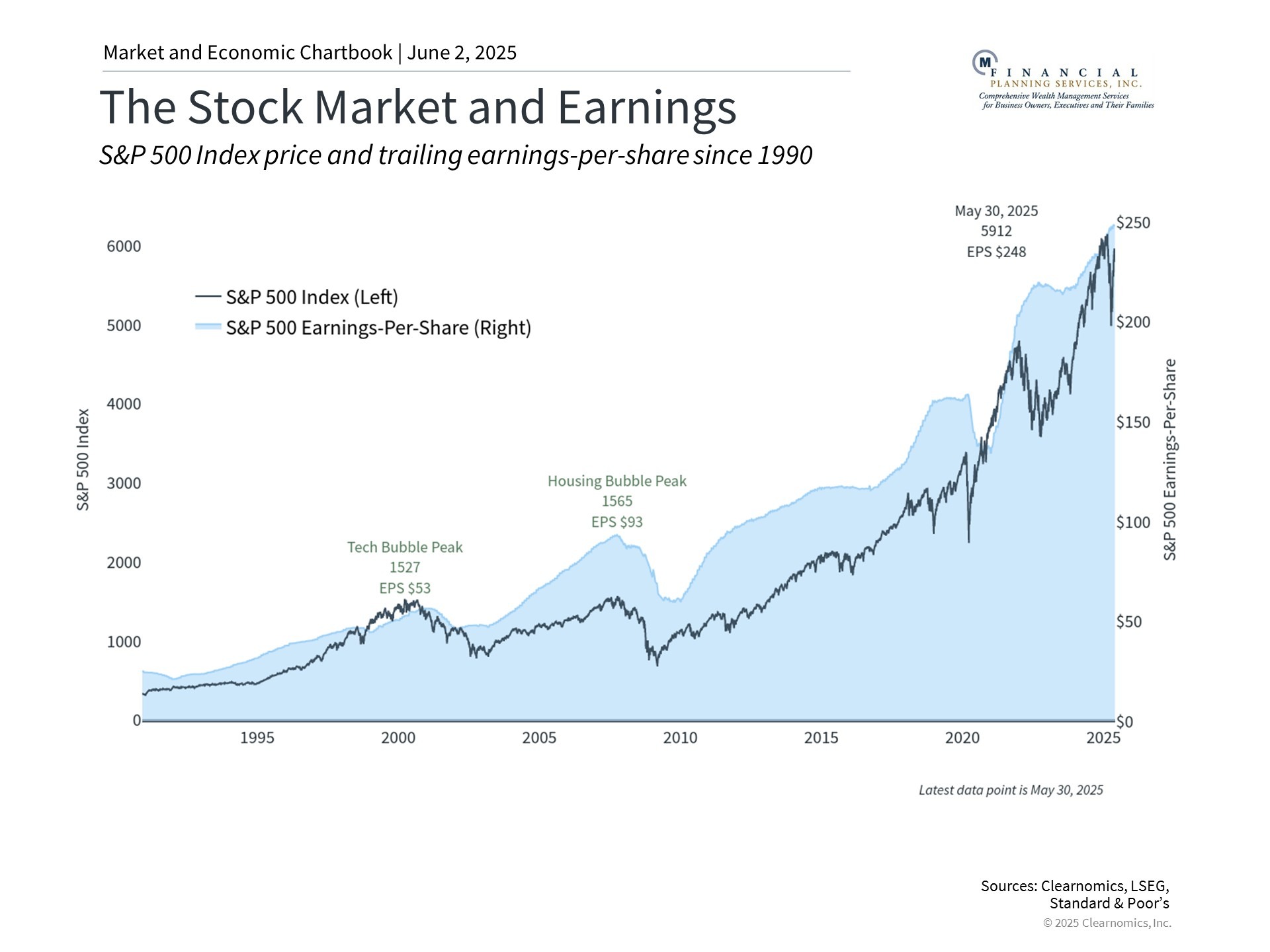
Company earnings (profits) were strong in the first quarter. Most S&P 500 companies beat expectations, with 64% reporting higher-than-expected revenue (sales). Technology companies performed especially well despite trade concerns.
While companies did well, consumers remained worried about tariffs and inflation. However, recent surveys show consumer sentiment may be improving. The University of Michigan survey showed inflation expectations dropping slightly in May. Strong earnings and better sentiment could help support stock prices.
The bottom line? May was a good month for investors despite the U.S. credit downgrade. Progress on trade deals helped boost markets. Long-term investors should focus on basic economic trends rather than daily policy news.
1. Standard & Poor's, Nasdaq, Bloomberg. All month end figures are as of May 30, 2025.