

Washington is in the news again as the federal government might shut down if leaders can't agree on new spending. This adds to a year where government policies on trade, taxes, and immigration have created uncertainty for the economy and stock markets.
Many investors wonder how politics might affect their money, especially if they worry about government debt. Looking at past patterns can help investors stay calm during times when politicians can't agree.
Political drama in Washington creates uncertainty, but history shows government shutdowns usually don't hurt stock markets much. While shutdowns are hard on government workers, they typically don't affect investment portfolios. For long-term investors, these events show why it's important to keep politics separate from money decisions.
Government shutdowns haven't hurt markets or the economy in the past
Each year, the federal government must pass a budget for the next fiscal year starting October 1. A budget tells government departments how much money they can spend. If Congress doesn't pass a budget by the deadline, the government might shut down. This means many government services stop and workers get sent home without pay.
Congress rarely passes budgets on time. This happens because politicians often can't agree on spending. Over almost fifty years, Congress has only passed budgets on time a few times. Usually, they use something called a "continuing resolution" to keep the government running while they negotiate. This is a temporary funding bill that buys more time.
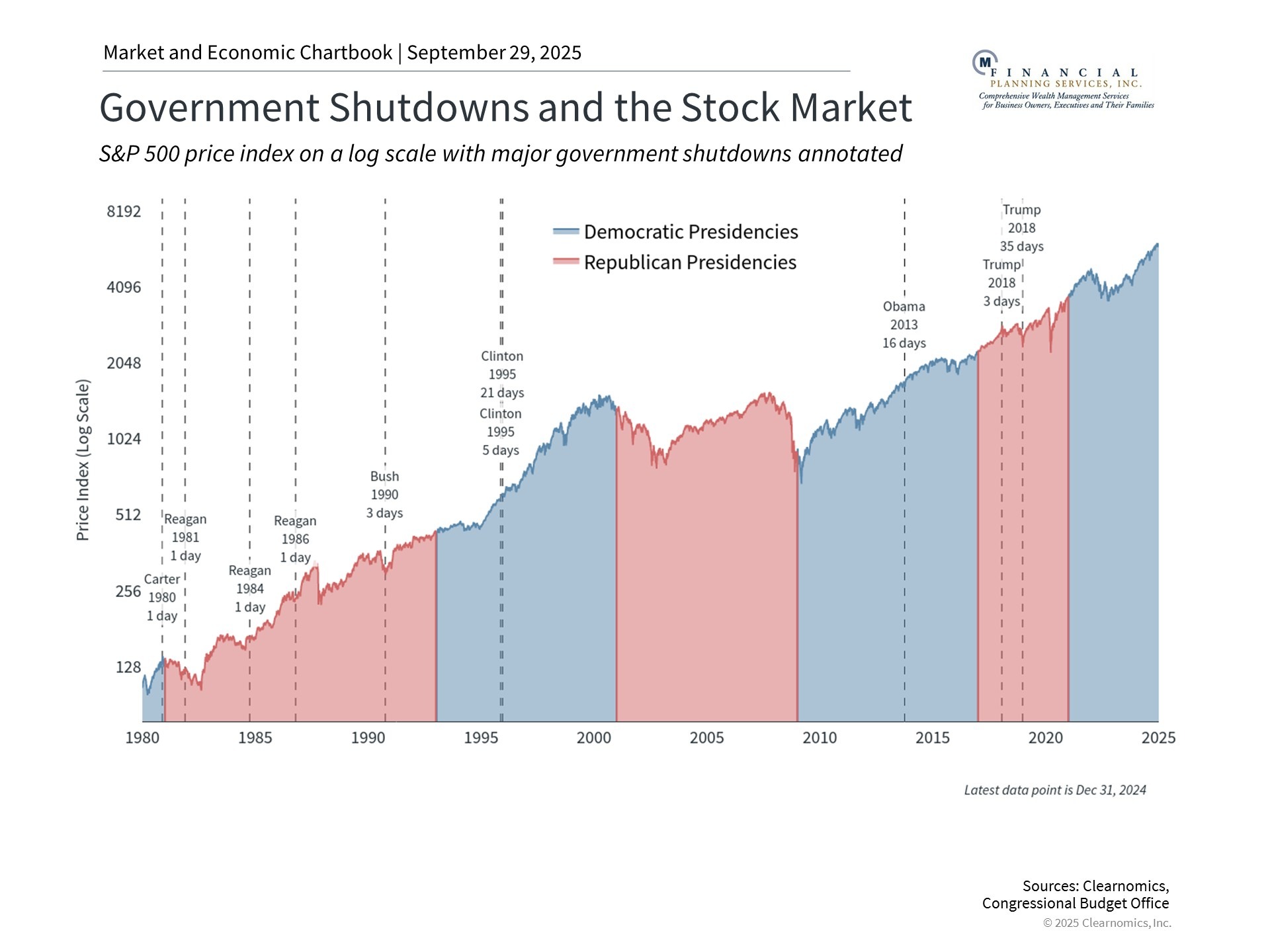
The chart shows that government shutdowns have happened regularly since 1980 under both Republican and Democratic presidents. Even the longest shutdowns didn't cause lasting damage to stock markets. This includes shutdowns under Reagan, Clinton's 21-day shutdown in 1995, Obama's 16-day shutdown in 2013, and Trump's 35-day shutdown from late 2018 to early 2019. For investors, shutdowns are temporary problems, not long-term threats.
Shutdowns show deeper political disagreements
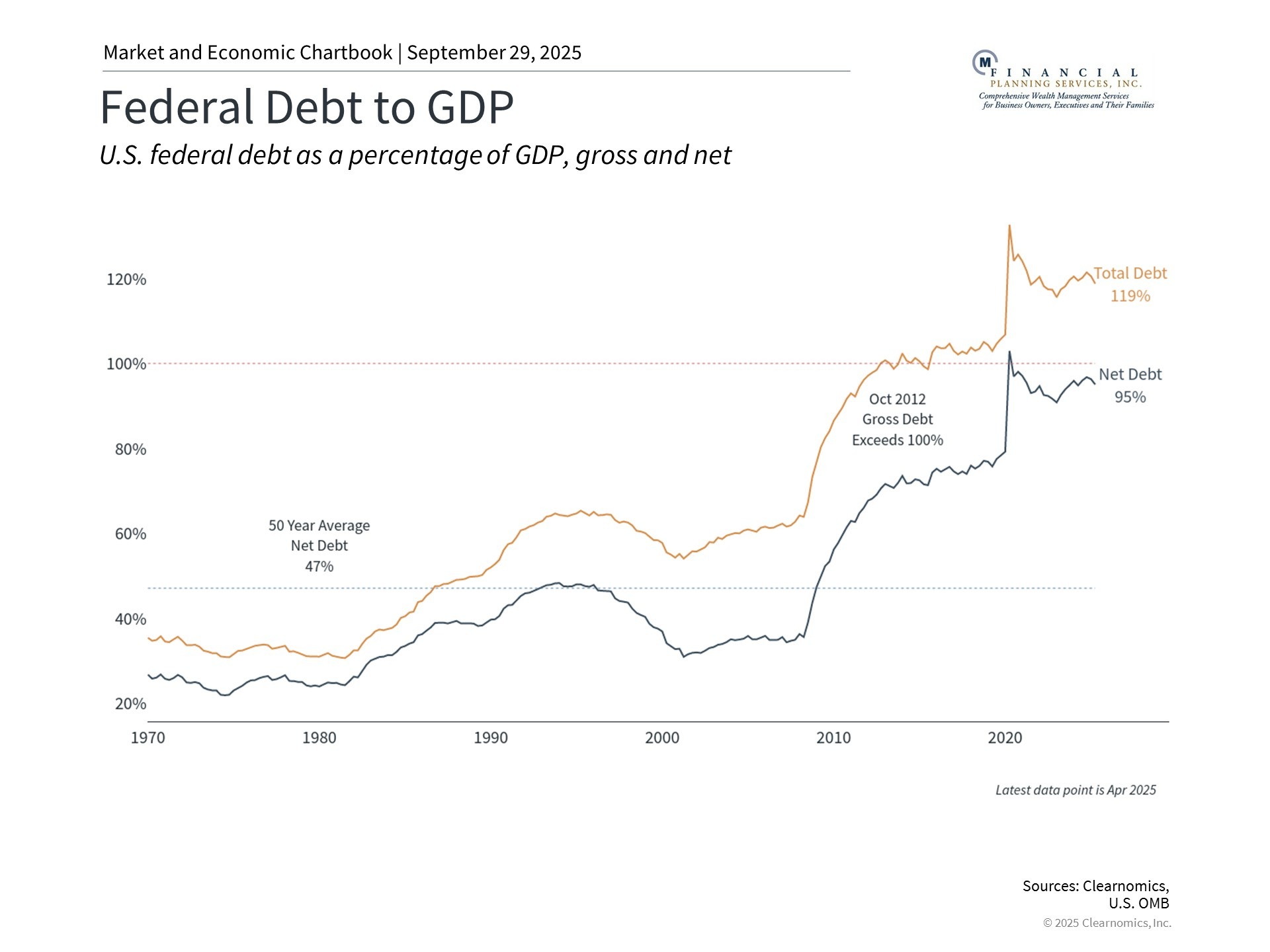
The current situation involves disagreements over spending priorities, mainly around healthcare. These budget fights show deeper differences about the government's role and fiscal responsibility. With federal debt now around 120% of GDP (a measure comparing debt to the economy's size), many agree the government needs to spend more carefully. But they disagree on how to do this.
This shutdown threat is different because the administration wants agencies to plan permanent job cuts, not just temporary ones. This could have longer-lasting effects on jobs and government spending. However, furloughed federal workers do get back pay once shutdowns end.
Stock markets focus on business basics, not political news
While many investors worry about the country's debt, government shutdowns usually don't affect stock markets. The reason is simple: shutdowns are temporary problems that don't change the basic health of the economy.
Shutdowns can delay important economic reports like jobs numbers and inflation data. They can also slow economic growth slightly if they last long enough, as federal workers spend less money and government services get disrupted. But these effects are usually small and temporary.
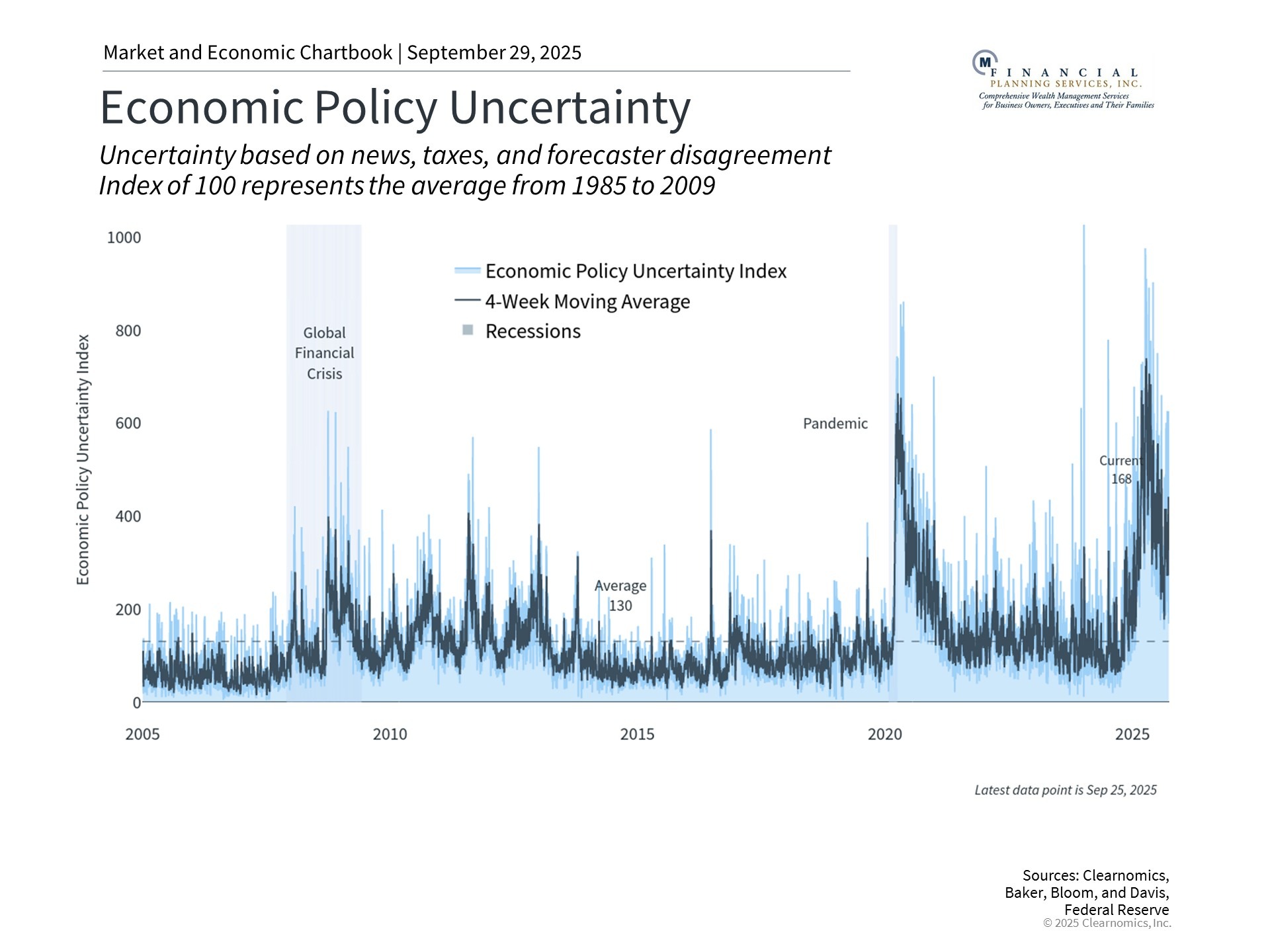
The Economic Policy Uncertainty chart shows that tariffs and taxes earlier this year created challenges for investors. However, with recent clarity on both issues, uncertainty has fallen toward normal levels. While a shutdown could create more uncertainty, history shows that even long government shutdowns usually don't hurt investors much.
The bottom line? Government shutdowns may dominate news headlines and create problems for federal workers, but they have historically had very little impact on stock markets. Investors should stay focused on their long-term financial plans rather than daily political events in Washington.
The content is developed from sources believed to be providing accurate information.
Content in this material is for general information only and not intended to provide specific advice or recommendations for any individual. All performance referenced is historical and is no guarantee of future results.