

Stocks are a key part of long-term investment plans. They have helped investors build wealth over time when used as part of a complete financial plan. But what kinds of stocks should you own? Most people focus on the biggest companies, but there are other types of stocks that can help make your portfolio stronger.
When people talk about "the stock market," they usually mean the S&P 500 or Dow Jones. The S&P 500 tracks the 500 biggest companies in America. The Dow tracks just 30 very large companies. Both focus only on the largest U.S. companies.
These big company indexes are good for understanding the overall market. But when building your own portfolio, you might miss other good opportunities. This is especially true now when just a few "mega cap" stocks (including the Magnificent 7) have been driving most of the market's gains and losses.
How can investors look beyond just the biggest companies? Small-cap stocks and international markets are two areas that can provide new opportunities and help spread out risk. Each offers different benefits that can make your portfolio more balanced.
Small company stocks offer different benefits
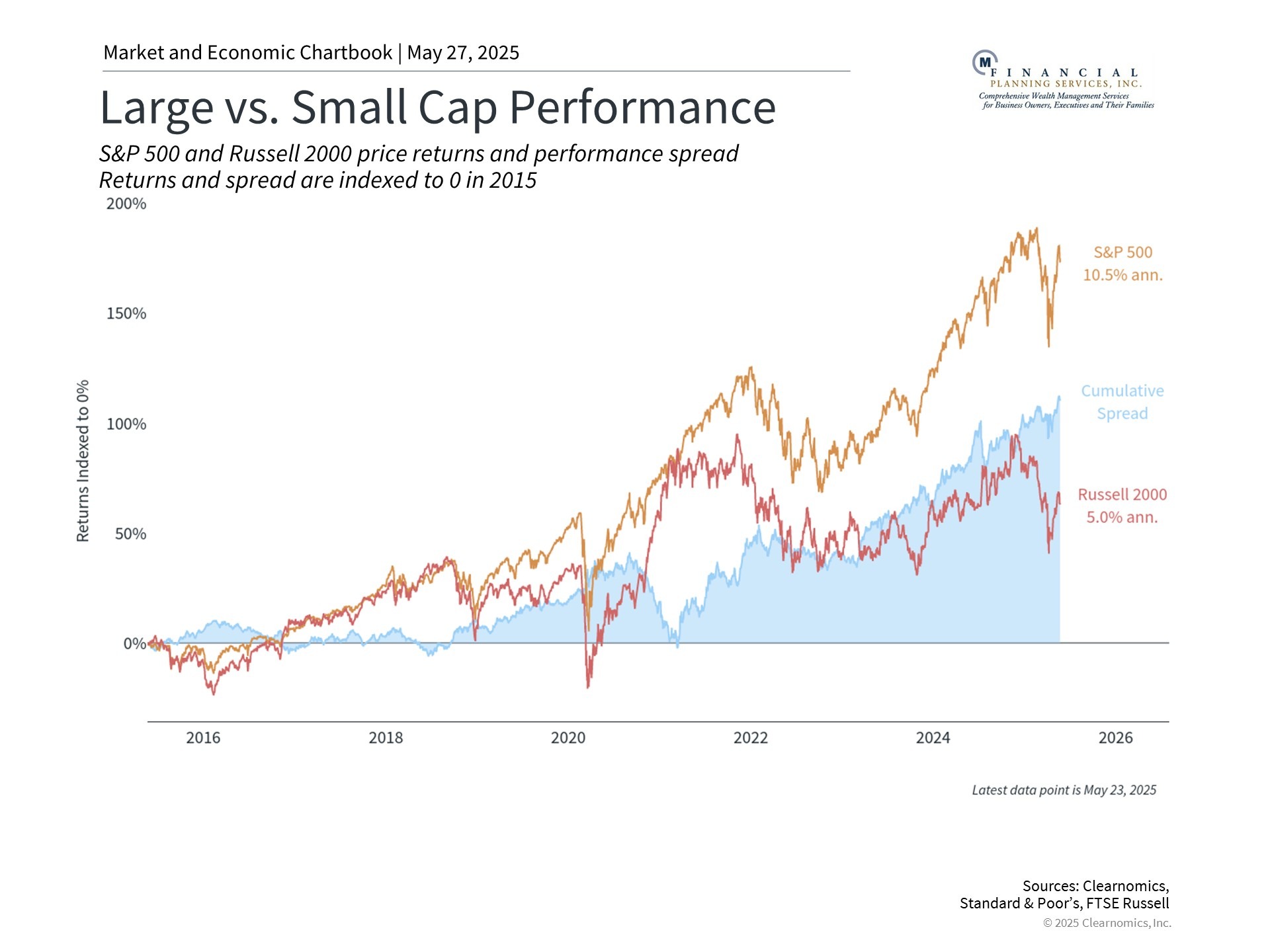
Small-cap stocks are companies worth a few hundred million to a couple billion dollars. This is much smaller than large companies worth tens of billions, or mega caps worth trillions.
The Russell 2000 index tracks small companies. Over the past 10 years, it gained 5.0% per year compared to 10.5% for the S&P 500. Small companies have done worse lately as big tech companies have grown so much. Small companies typically have less technology business and make more money from U.S. customers.
Small caps have struggled this year due to uncertainty about trade policies and economic growth. But this has made them cheaper to buy. Small-cap stocks now trade at lower price-to-earnings ratios than large companies. The Russell 2000's price-to-book value is about 0.8x, well below the normal 1.2x. Meanwhile, many S&P 500 stocks are trading at very high prices.
Small companies also borrow money differently than large companies. They use more floating-rate debt, which means interest rate changes affect them more. This hurt them when rates rose quickly in 2022, but the more stable environment now could help.
International stocks offer good value
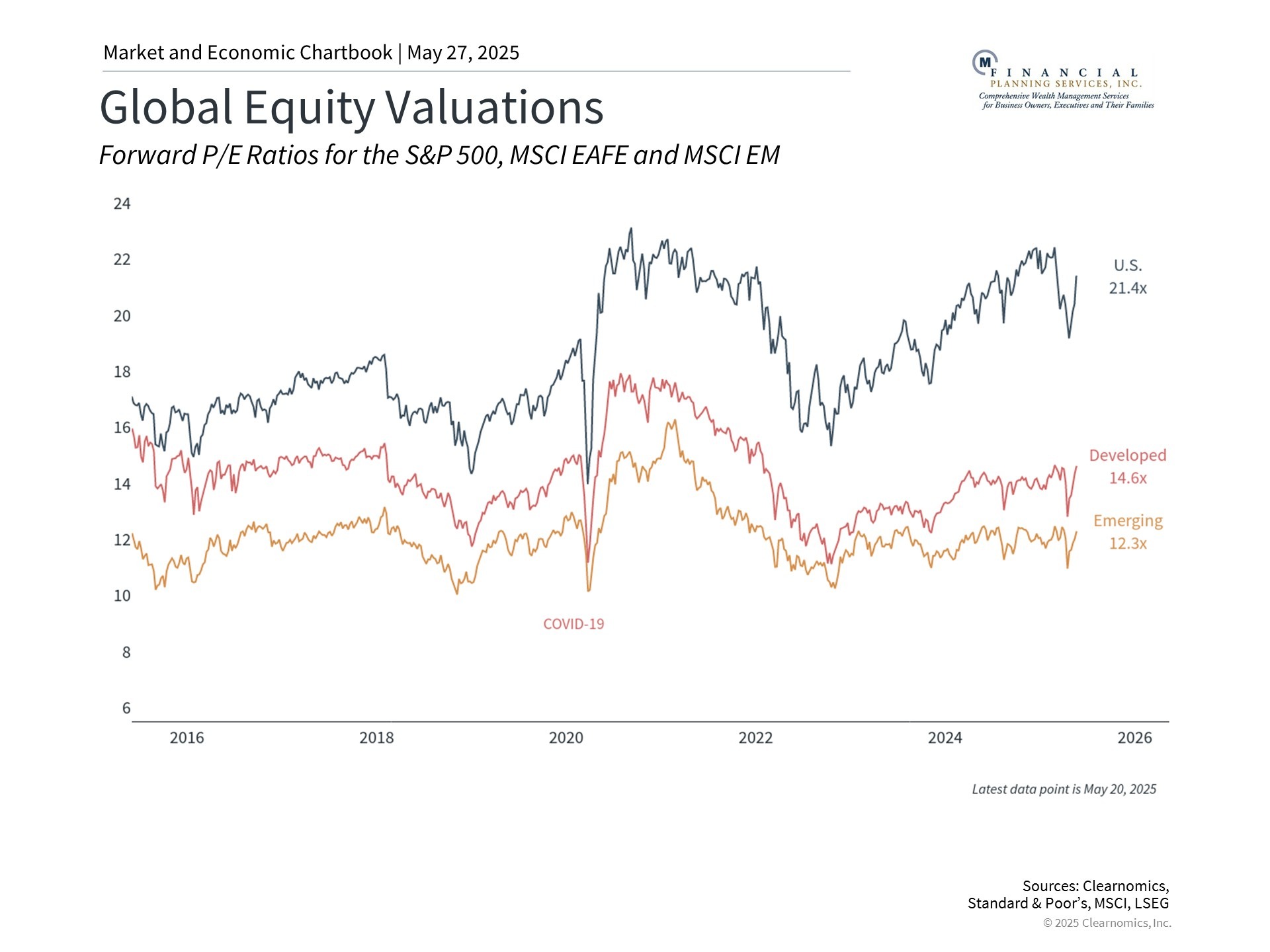
International stocks are another area with attractive prices. These include developed markets (like Europe, Japan, and Australia) and emerging markets (like China, India, and Brazil). These categories reflect how mature their economies and markets are.
While U.S. stocks led for most of the past decade, international stocks have done better this year. The MSCI EAFE index (tracking 21 developed countries) has gained about 17.5% this year. The MSCI EM index (emerging markets) has risen 10%.
International markets also offer better valuations than U.S. stocks. While the S&P 500 trades at high price-to-earnings ratios, international markets are cheaper. This is partly due to political and economic challenges in these regions over the past ten years.
One important difference with international investing is currency effects. When the dollar gets weaker, foreign investments become worth more dollars when you sell them. This "currency tailwind" has helped international stocks perform well this year.
Spreading investments across different areas is important
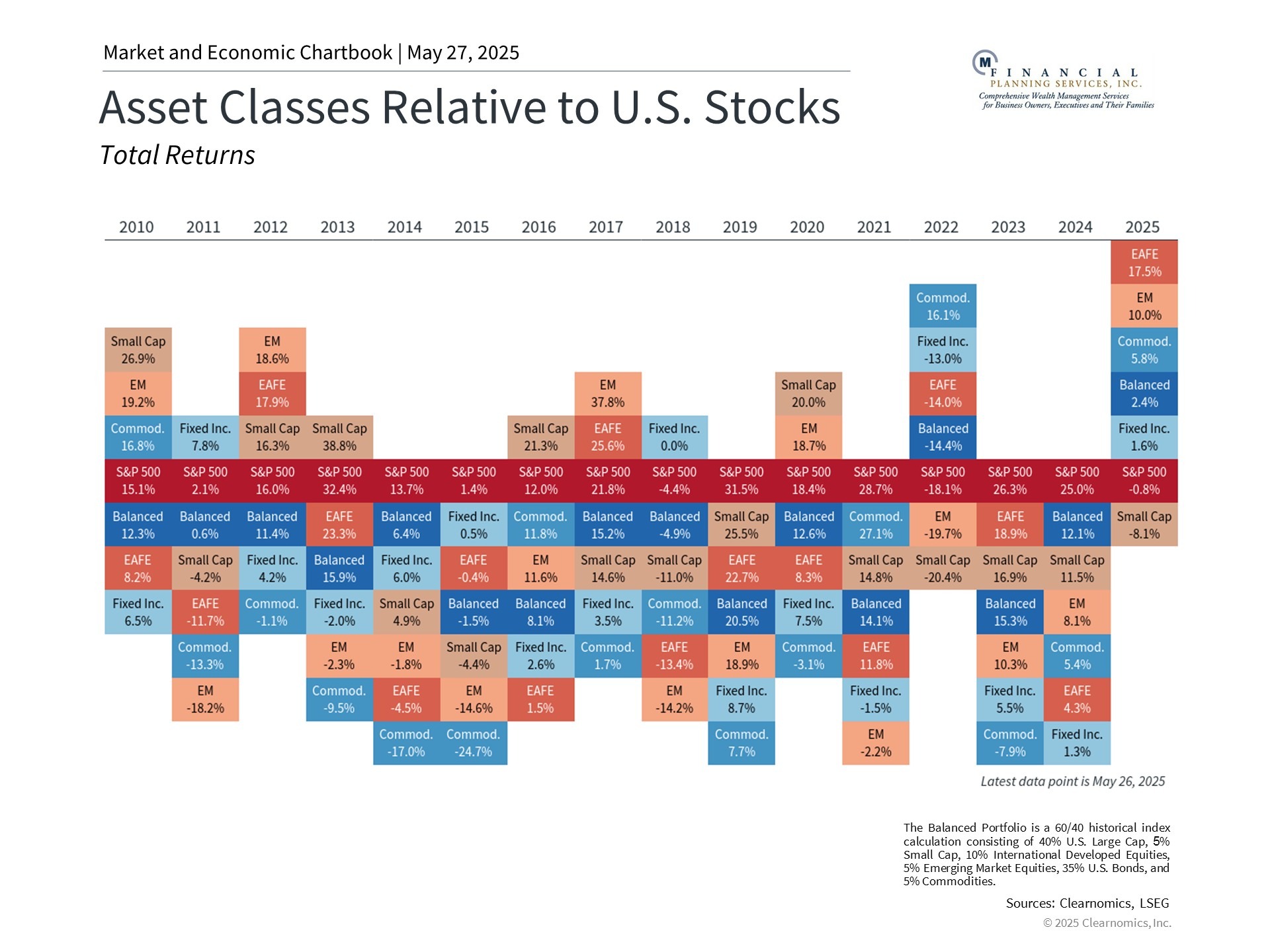
For long-term investors, owning small-cap and international stocks can help create more balanced portfolios. This is especially important after large-cap stocks have been driven by just a few huge companies.
This doesn't mean U.S. large caps will become less important. It's also not about making big changes to good portfolios. Instead, long-term investing means holding the right mix of all these different types of investments. By including cheaper parts of the market, we can potentially improve long-term results. While any investment type may do poorly sometimes, their different patterns can provide valuable balance over time.
The bottom line? While the S&P 500 and Dow remain important measures, investors should consider spreading their money across other parts of the market, including smaller companies and international stocks. Building proper long-term portfolios is still the best way to reach your financial goals.
1. Russell 2000 and S&P 500, price returns, from January 2, 2015 to May 23, 2025
2. MSCI EAFE and MSCI EM, total returns, January 1, 2025 to May 23, 2025